Columbus Day HOA Communication: An Inclusive Guide

The second Monday in October can be difficult for HOA boards to address because residents may understand the holiday in very different ways.
Browse By Category
Sign up for Our Newsletter


Sign up for Our Newsletter
Trending Now


The second Monday in October can be difficult for HOA boards to address because residents may understand the holiday in very different ways.
Why Communication Matters
A thoughtful Columbus Day communication plan can help the association share schedules, recognize differing views, and keep the focus on respectful community life.
Columbus Day remains a federal holiday in the United States. In 2026, it falls on Monday, October 12, and many federal offices will close. Yet state and local observances vary, and some governments use Indigenous Peoples’ Day or another name.
An HOA does not have to adopt the wording used by the federal government. It may choose language that reflects local practice, its own calendar, and the needs of its residents.
The way a board announces that choice matters. A short calendar notice can be read as a statement about history, culture, or identity, even when the board only meant to announce that the management office will be closed.
Understand Why the Holiday Draws Different Views
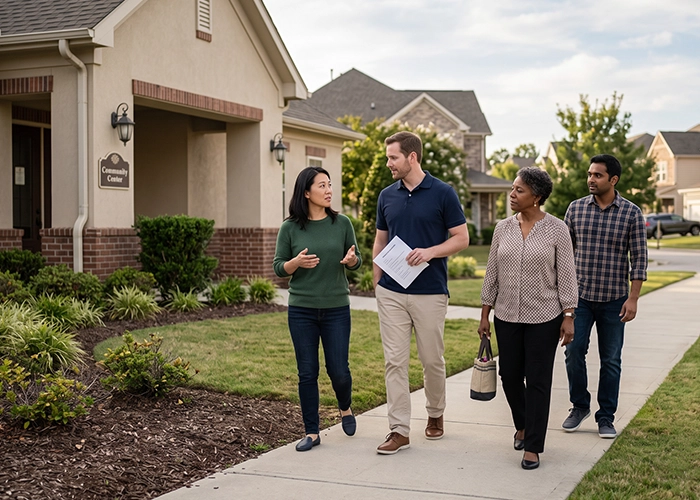
Columbus Day has long been tied to Italian-American heritage. For many Italian Americans, the holiday reflects the struggles, contributions, and growing public recognition of their community in the United States.
Other residents associate the date with colonization and the harm experienced by Indigenous peoples after European arrival. Many states, cities, schools, and organizations now recognize Indigenous Peoples’ Day, either in place of Columbus Day or alongside it.
These views may feel personal to residents. Board members should not assume that everyone in the community shares the same understanding or that one household can speak for an entire cultural group.
The association’s role is not to force agreement. Its job is to communicate clearly, operate fairly, and maintain a setting where residents can express lawful views without being targeted or treated with disrespect.
Check Local Practice Before Choosing the Wording
Before preparing a notice, check how the holiday is identified by the state, county, and city where the community is located. School calendars and local government schedules can also show which name residents are likely to see.
Local practice may affect trash collection, mail, banks, schools, public transit, and permit offices. Those changes are often more useful to residents than a broad statement about what the day represents.
The board should then review its own records. Look at prior newsletters, office calendars, employee handbooks, management contracts, and vendor schedules. Consistency can prevent confusion, although an outdated practice may still need to be changed.
If the community has used different names over time, that does not require a long public explanation. A simple, accurate label and a clear operations notice may be enough.
Select a Neutral and Accurate Calendar Label

There is no single label that will fit every association. The best choice will depend on local observance, resident expectations, and whether the HOA is hosting an educational or cultural program.
Boards can consider several options:
- Columbus Day: This matches the federal holiday name.
- Indigenous Peoples’ Day: This may match state or local practice.
- Columbus Day and Indigenous Peoples’ Day: This recognizes both observances.
- October Holiday: This can work for a basic office schedule, but it may feel vague.
- Second Monday in October: This is neutral, though less familiar to readers.
Using both holiday names is often a practical choice when the community includes a wide range of views. Still, the board should not use both merely to appear neutral if the local jurisdiction has an official name that residents need to know.
Accuracy comes first. If the office is open, do not send a closure message simply because federal offices are closed. If trash pickup will continue as usual, say so.
Keep Operational Notices Focused
Most HOA holiday notices serve a practical purpose. Residents want to know whether the management office, clubhouse, pool, gatehouse, or maintenance department will operate on a normal schedule.
A useful notice should answer these questions:
- Will the management office be open?
- Will staff answer calls and emails?
- Will gates, amenities, and package rooms follow normal hours?
- Will trash, recycling, landscaping, or other vendors change their schedules?
- How should residents report an urgent issue?
- When will normal service resume?
Keep the first paragraph short and direct. Historical background should not appear in an operations notice unless it has a clear purpose and has been checked for accuracy.
For example, the association might write: “The management office will be closed Monday, October 12, in observance of the October holiday. Normal office hours will resume Tuesday. For a property emergency, call the after-hours number listed below.”
If the board uses both names, it can say: “The management office will be closed Monday, October 12, for Columbus Day and Indigenous Peoples’ Day.” The notice does not need to argue for or against either observance.
Use Respectful Terms and Complete History

Boards should be careful when referring to Indigenous peoples. The National Museum of the American Indian recommends using the terms that members of a specific community use for themselves when that information is known.
Avoid treating Indigenous peoples as one culture or speaking about them only in the past. Native nations have distinct histories, governments, languages, and present-day communities.
The same care should be given to Italian-American history. An inclusive message can recognize the meaning that Columbus Day has held for many Italian Americans without presenting a simplified version of European arrival in the Americas.
If the HOA publishes educational content, it should use reliable sources and include more than one perspective. Avoid cartoons, costumes, decorations, or event themes that reduce a living culture to a stereotype.
The board can also ask a qualified local museum, tribal cultural office, historical society, or Italian-American organization to review educational materials. Compensation may be appropriate when someone is asked to provide expert work.
Invite Resident Input Without Creating a Referendum
Resident feedback can help the board understand local expectations. It does not mean every wording choice must go to a community-wide vote.
The board can collect input through:
- A short resident survey
- A communications or events committee
- A comment period during an open meeting
- A dedicated email address or online form
- A post-event survey
Ask focused questions. Instead of “Which side are you on?” ask whether the calendar label was clear, whether the notice gave enough schedule information, and what kinds of educational or cultural programs residents would attend.
The board should explain how feedback will be used. It may help guide future communications, but the board must still consider legal duties, employee policies, vendor contracts, and operational needs.
Respond Calmly When Residents Disagree
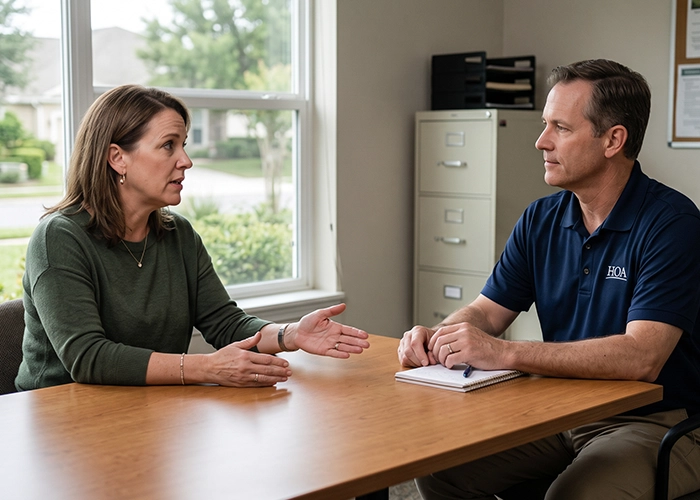
Even careful language may draw complaints. Some residents may see a combined name as disrespectful, while others may object if the association uses only Columbus Day.
Start by listening. Acknowledge the concern without agreeing to facts that have not been checked or promising an immediate change.
A helpful response may say: “Thank you for sharing your concern. The board understands that residents have different views about this date. We used the wording to provide accurate schedule information and will review your feedback before next year’s calendar is prepared.”
Do not debate residents through social media comments. Move detailed concerns to a suitable channel, apply the community’s conduct rules fairly, and keep the discussion focused on association business.
Threats, harassment, slurs, and personal attacks should be handled under the same rules that apply at other times. A disagreement about a holiday does not excuse conduct that disrupts meetings or targets a resident.
Plan Inclusive Community Events
An HOA is not required to host a program for the holiday. In many communities, a simple office notice is the best approach.
If the association chooses to hold an event, focus on learning, neighborly contact, or service rather than a staged celebration of one version of history. Possible activities include:
- A local history talk led by a qualified speaker
- A community reading list from reliable museums and libraries
- An Italian-American heritage program focused on art, food, migration, or local families
- An Indigenous history program developed with a local Native nation or cultural organization
- A volunteer project that is not tied to a political message
- A moderated discussion with clear conduct rules
Do not combine unrelated cultures into one display merely for convenience. Each program should have a clear purpose and enough care behind it to avoid token treatment.
Food events also require planning. Label known allergens, follow local food-service rules, and avoid describing a dish as culturally authentic unless that description comes from a reliable source.
Make Events Accessible to More Residents
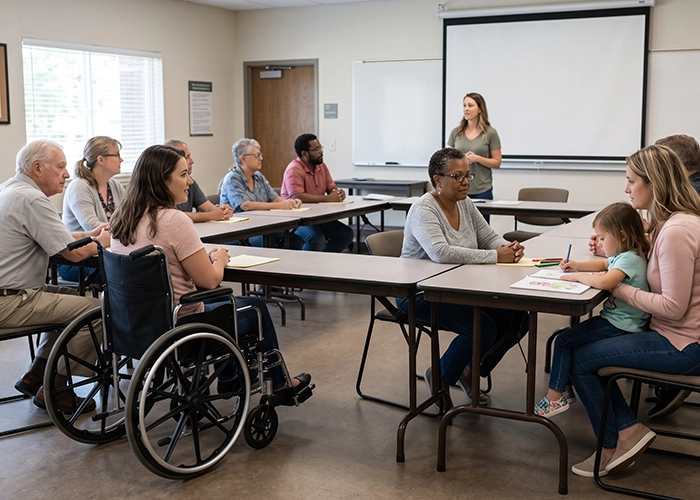
An inclusive event should be open in practice, not only in the invitation. Consider mobility access, seating, hearing needs, language access, parking, and the timing of the program.
Families may need child-friendly options, while older residents may prefer daytime hours. A virtual option can help people who cannot attend in person.
The board should also consider cost. A free event or a low-cost program supported by the approved events budget will usually allow broader participation than a ticketed dinner.
Provide a clear contact for accommodation requests. Ask residents to submit requests by a reasonable date, but remain flexible when a simple change can still be made.
Separate Board Speech From Resident Speech
The HOA’s newsletter, website, and official social pages represent the association. Content posted there should follow an approved communications policy.
Resident discussion spaces may have different rules. If the association runs a forum or social group, it should enforce content and conduct standards in a consistent way. The board should not remove one viewpoint while allowing similar posts from another viewpoint simply because it agrees with the message.
Political signs, flags, door decorations, and displays may be governed by state law and the association’s documents. Before enforcing a restriction, the board should confirm that it has authority and that the rule has been applied evenly.
When constitutional or statutory rights may be involved, association counsel should review the issue. Laws differ by state, and an HOA is not always treated the same way as a government agency.
Coordinate With Employees and Vendors
A federal holiday does not automatically require every private HOA office or vendor to close. The management agreement, employee policy, and service contracts should control the schedule.
Confirm hours with management, security, maintenance, waste collection, landscaping, and other vendors. Do this early enough to correct a calendar or arrange backup coverage.
Employees should also receive the final wording before residents do. Staff members need to know how to answer questions without offering personal opinions on behalf of the association.
Provide a simple response guide. It might state the official office schedule, the wording approved by the board, and the person to whom complaints should be directed.
Build a Repeatable Holiday Communication Policy
The October debate often reveals a wider problem: the association has no standard process for holiday notices. A written policy can make future decisions more consistent.
The policy can cover:
- Who approves the annual calendar
- Which sources confirm holiday names and dates
- How office and vendor schedules are checked
- When both religious and civic observances are mentioned
- Which communication channels are used
- How resident feedback is handled
- Who reviews sensitive educational content
The policy should remain flexible. Language, laws, and local practices can change, and the board may need to update its approach.
Review the calendar once a year instead of debating each holiday at the last minute. An annual review gives the board time to consult residents, staff, counsel, or cultural organizations when needed.
“Sample Columbus Day Communication”
The following sample keeps the focus on operations while recognizing both names:
October Holiday Office Schedule
The management office will be closed Monday, October 12, in observance of Columbus Day and Indigenous Peoples’ Day. Normal office hours will resume Tuesday, October 13.
Trash collection and gate service will continue on their regular schedules. For an urgent common-area issue while the office is closed, please call the association’s after-hours number. We respect that residents may observe this date in different ways and wish everyone a safe and peaceful day.
The sample should be adjusted to match the HOA’s actual schedule and local terminology. Boards should never copy closure or emergency details without checking them first.
Building a Community Where Every Voice Matters
HOA boards do not need to settle the meaning of Columbus Day or Indigenous Peoples’ Day for every resident.
They can serve the community well by using accurate terms, sharing useful schedule details, welcoming thoughtful input, and treating different backgrounds with care.
Clear policies and thoughtful communication can help your HOA build a more respectful community. Explore our directory today to find a trusted management company near you.
Related Articles:
- Mastering Community Harmony through Effective HOA Communication
- The Importance Of Communication Through HOA Software
- HOA Conflict Resolution: Communication Strategies That Build Trust
Trending Now

Related Article


Sign up for Our Monthly Newsletter
Sign up below for monthly updates on all HOA Resource