

HOA Fences: Rules, Approvals, and Best Practices for Homeowners

Fences serve many purposes in HOA communities. They add privacy, improve security, define property lines, and enhance curb appeal. At the same time, they can also create disputes when homeowners install fences without following community guidelines.
Browse By Category
Sign up for Our Newsletter

Sign up for Our Newsletter
Trending Now


Fences serve many purposes in HOA communities. They add privacy, improve security, define property lines, and enhance curb appeal. At the same time, they can also create disputes when homeowners install fences without following community guidelines.
Why Communities Regulate Them
HOA fences are often regulated to maintain a consistent appearance throughout the neighborhood. Most associations want homes to complement one another instead of creating a mix of conflicting styles and materials.
Without fence standards, communities can quickly lose visual consistency. One home may install a tall wooden privacy fence while another uses chain-link fencing or brightly painted materials. Over time, this can affect the neighborhood’s appearance and even influence property values.
Fence rules also help address practical concerns. Improper fence placement can create visibility issues near intersections, interfere with drainage systems, or block access to utility areas. Some communities also regulate fences to preserve scenic views or shared open spaces.
For many associations, fence guidelines are not intended to prevent improvements. Instead, they create structure so exterior changes remain compatible with the community as a whole.
Common HOA Fence Rules Homeowners Should Know
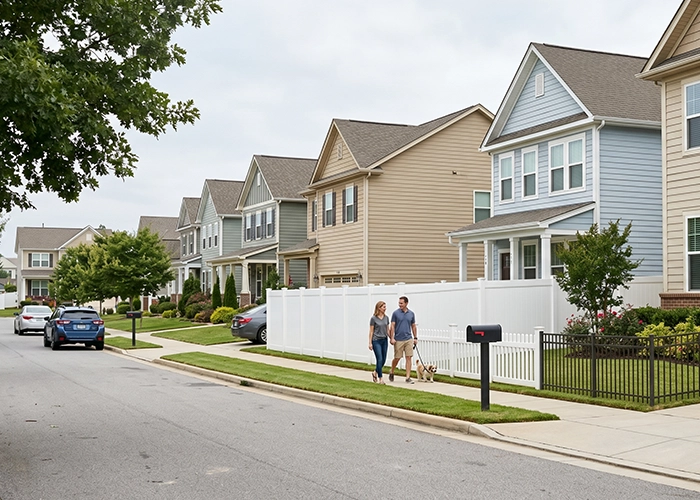
Most HOA communities include fence requirements within their governing documents or architectural guidelines. While every association is different, many fence rules cover similar areas.
Here are some of the most common HOA fence restrictions homeowners encounter:
1. Fence Height Restrictions
Height limitations are among the most common fence regulations. Associations often allow taller fences in backyards while restricting fence heights in front yards.
For example:
- Backyard privacy fences may be limited to six feet
- Front-yard fences may only allow three or four feet
- Corner lots may have additional visibility restrictions
These rules help balance privacy with safety and curb appeal.
2. Approved Fence Materials
Many HOAs limit the materials homeowners can use for fencing. Approved options often include:
- Wood
- Vinyl
- Aluminum
- Wrought iron
- Composite fencing
Some associations prohibit chain-link fencing entirely because it may not match the neighborhood aesthetic. Others may restrict unfinished wood or certain colors.
3. Fence Colors and Finishes
Communities frequently regulate fence colors to maintain consistency. Neutral tones are usually preferred because they blend better with surrounding homes.
In some neighborhoods, homeowners must stain or paint fences using approved colors. Bright or unusual colors may require special approval or may not be allowed at all.
4. Fence Placement Requirements
Fence placement rules help prevent boundary disputes and access issues. HOAs often require fences to remain within property lines while avoiding utility easements or drainage areas.
Some associations also require setbacks from sidewalks, common areas, or neighboring properties. Homeowners may need a property survey before installation.
5. Maintenance Expectations
Fence maintenance standards are another important part of HOA fence rules. Communities usually require homeowners to repair damaged or deteriorating fencing promptly.
This may include:
- Replacing broken boards
- Repairing leaning sections
- Removing rust
- Repainting faded areas
- Cleaning mold or mildew buildup
Neglected fences can affect surrounding homes and reduce neighborhood appeal.
Why Architectural Approval Matters for HOA Fences
In many communities, homeowners cannot install a fence without prior approval from the architectural review committee or HOA board.
This approval process protects the association and the homeowner. It ensures the proposed fence complies with community guidelines before money is spent on construction.
Applications often require:
- Fence design plans
- Material descriptions
- Color selections
- Property surveys
- Contractor information
- Proposed dimensions
Some homeowners become frustrated by approval timelines, but skipping the process can lead to serious consequences. An unapproved fence may result in violation notices, fines, or even removal requirements.
It is usually far easier to secure approval first than to correct problems later.
How HOA Fence Rules Help Protect Property Values
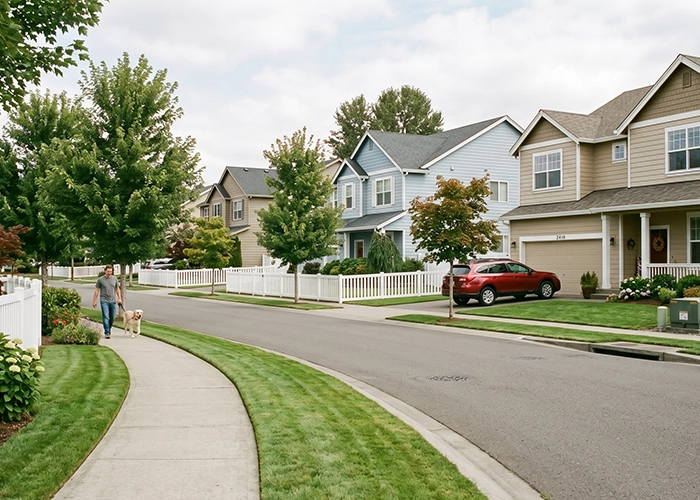
Fence regulations are often tied closely to property value protection. Buyers tend to prefer neighborhoods that appear clean, organized, and visually consistent.
When fencing standards vary dramatically from one home to another, the neighborhood may start to look less cohesive. Poorly maintained fences can also create the impression that the community is not being managed properly.
Consistent fence standards help create a polished appearance across the neighborhood. This consistency can support resale values and make the community more appealing to prospective buyers.
While homeowners may sometimes view fence restrictions as inconvenient, many eventually recognize the long-term benefits they provide.
Neighbor Disputes Involving HOA Fences
Fence disagreements are common in HOA communities. Even small misunderstandings can become larger disputes if communication breaks down.
Some common fence-related conflicts include:
- Fence placement disagreements
- Shared maintenance responsibilities
- Height complaints
- Obstructed views
- Encroachment onto neighboring property
- Damage caused during installation
Good communication can prevent many of these issues before construction begins. Homeowners should speak with neighbors early, especially when a fence will sit near a shared boundary line.
Associations can also help mediate disputes when governing documents clearly define responsibilities and procedures.
HOA Fences and Local City Regulations
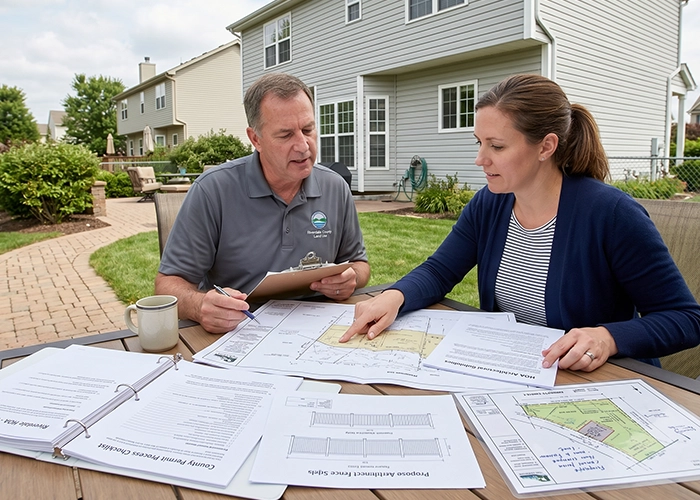
HOA fence rules do not replace local government requirements. Homeowners must often comply with both HOA guidelines and municipal codes.
Cities and counties may regulate:
- Maximum fence heights
- Pool fencing requirements
- Visibility clearances
- Permit requirements
- Setback distances
- Historic district restrictions
In some cases, local regulations may be stricter than HOA rules. In others, the HOA may impose tighter community standards.
Before installing a fence, homeowners should verify both sets of requirements. Approval from one authority does not automatically guarantee approval from the other.
Choosing the Right Fence for an HOA Community
Selecting the right fence involves more than appearance alone. Homeowners should consider maintenance needs, durability, privacy, and long-term costs.
Different fence materials offer different advantages.
Wood Fences
Wood remains a popular choice because of its traditional appearance and strong privacy benefits. It can work well in many HOA communities when properly maintained.
However, wood fencing requires regular upkeep. Staining, sealing, and repairs may be needed over time to prevent weather damage.
Vinyl Fences
Vinyl fencing has become increasingly popular due to its low maintenance requirements. It resists moisture, insects, and fading better than many wood products.
Many HOAs approve vinyl fencing because it maintains a clean appearance with minimal upkeep.
Aluminum and Wrought Iron Fences
Metal fencing offers durability and elegance while preserving visibility. These fences are common near front yards, pools, and decorative landscaping areas.
Although they provide less privacy, they often complement upscale communities well.
Composite Fences
Composite fencing combines recycled materials with engineered durability. It offers a modern appearance while requiring less maintenance than traditional wood.
Some HOAs approve composite fencing because it balances appearance and longevity.
Mistakes Homeowners Make With HOA Fences
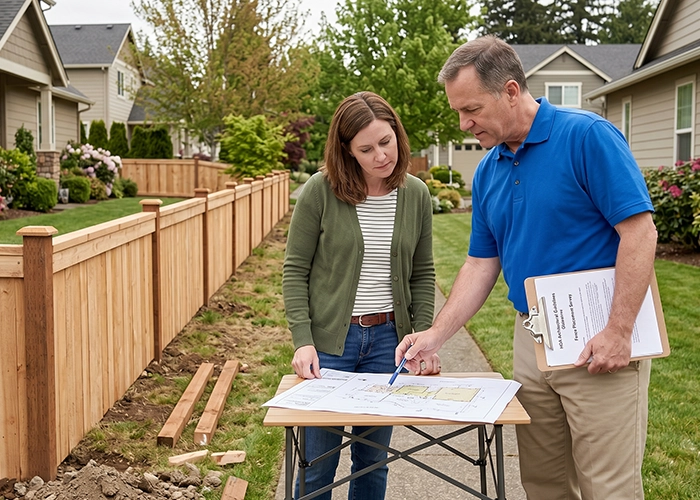
Fence projects often run into problems when homeowners rush the process or overlook important details.
Some of the most common mistakes include:
Skipping HOA Approval
One of the biggest mistakes is installing a fence before receiving written approval. Verbal conversations are rarely enough to protect homeowners if disputes arise later.
Ignoring Property Lines
Incorrect fence placement can create legal conflicts with neighbors. Even a small encroachment can become expensive to correct.
A professional property survey may help avoid these issues.
Choosing Unapproved Materials
Homeowners sometimes assume any attractive fence will receive approval. Unfortunately, associations often have strict material and color standards.
Checking guidelines early helps avoid wasted expenses.
Forgetting About Maintenance
Low-cost fencing may initially seem appealing, but neglected fencing can quickly become a problem. Homeowners should think about long-term maintenance before choosing materials.
Tips for Getting HOA Fence Approval Faster
The approval process tends to move more smoothly when homeowners submit complete and accurate applications.
Here are several ways to improve the process:
- Review HOA fence guidelines carefully before planning
- Submit all required documents together
- Include detailed drawings and dimensions
- Use approved materials and colors
- Communicate with neighbors ahead of time
- Hire experienced contractors familiar with HOA requirements
Associations are more likely to approve projects quickly when applications are complete and clearly follow community standards.
When HOA Fence Rules Create Challenges

Not every homeowner agrees with fence restrictions. Some residents may feel the rules are too strict or outdated.
For example, homeowners with pets may want taller fencing for safety. Others may prefer more privacy than the HOA allows. In some communities, older fence standards may not reflect newer design trends or materials.
When concerns arise, homeowners can often work with the board to request variances or propose updated guidelines. Productive communication usually works better than confrontation.
HOA boards should also remain open to reviewing fence policies periodically. Communities evolve over time, and regulations may need updates to balance homeowner preferences with neighborhood standards.
HOA Boards and Consistent Fence Enforcement
Consistency matters when enforcing HOA fence rules. If one homeowner receives approval for a certain fence style while another homeowner is denied for the same design, frustration can grow quickly.
Boards should apply fence guidelines fairly and document decisions carefully. Clear communication also helps homeowners understand why certain applications are approved or denied.
Transparency can reduce accusations of favoritism or selective enforcement. It also strengthens trust between homeowners and association leadership.
When boards handle fence enforcement professionally, communities often experience fewer disputes overall.
Creating Attractive and Functional HOA Communities
Fences can improve both appearance and functionality within a neighborhood when planned carefully. They create privacy, define outdoor spaces, and contribute to overall community design.
The most successful HOA communities usually strike a balance between individual homeowner preferences and shared neighborhood standards. Fence guidelines play an important role in maintaining that balance.
When homeowners understand the rules and associations communicate expectations clearly, fence projects become much easier for everyone involved.
Building Better Communities Through Smart Fence Policies
HOA fences may seem like a small part of community management, but they influence appearance, property values, neighbor relationships, and homeowner satisfaction.
From architectural approvals to rule enforcement, experienced HOA management can help boards create fair processes that benefit the entire neighborhood.
If your association needs help managing HOA fence policies, homeowner communication, or architectural review procedures, now is a good time to explore our directory for management support services that can help streamline your day-to-day operations and make them much easier.
Related Articles:
- State Laws On Homeowner Rights To Review And Copy Governing Documents
- How to Update HOA Rules: What the Board Should Know
- Davis Stirling Act: What Is It, Rules, Fines, And Violations
Trending Now

Related Article



Sign up for Our Monthly Newsletter
Sign up below for monthly updates on all HOA Resource