HOA Meeting Minutes Rules: What Associations Must Record and Why It Matters

Every homeowners association relies on clear documentation to maintain transparency and accountability. One of the most important records any association keeps is the official meeting minutes. Understanding HOA meeting minutes rules helps boards stay organized, avoid disputes, and maintain accurate records of decisions that affect the community.
Browse By Category
Sign up for Our Newsletter

Sign up for Our Newsletter
Trending Now


Every homeowners association relies on clear documentation to maintain transparency and accountability. One of the most important records any association keeps is the official meeting minutes. Understanding HOA meeting minutes rules helps boards stay organized, avoid disputes, and maintain accurate records of decisions that affect the community.
When meeting minutes are done properly, they create a reliable historical record for board members, homeowners, and future leadership. Without them, confusion and legal risks can quickly arise.
Understanding HOA Meeting Minutes Rules
HOA meeting minutes rules exist to ensure that board decisions are properly documented and accessible to homeowners. These rules guide how minutes should be written, what information should be included, and how records should be stored.
Meeting minutes are not meant to capture every conversation that occurs during a meeting. Instead, they provide a concise summary of official actions taken by the board. This includes motions, votes, approvals, and other decisions that affect the association.
Most governing documents and state laws require associations to keep accurate records of board meetings. These records often become part of the official association documents. In many cases, homeowners have the right to review these records upon request.
Minutes also serve another purpose. They help board members stay accountable to the community they represent. When decisions are clearly documented, it becomes easier for homeowners to understand how and why certain actions were taken.
Why HOA Meeting Minutes Matter for Communities
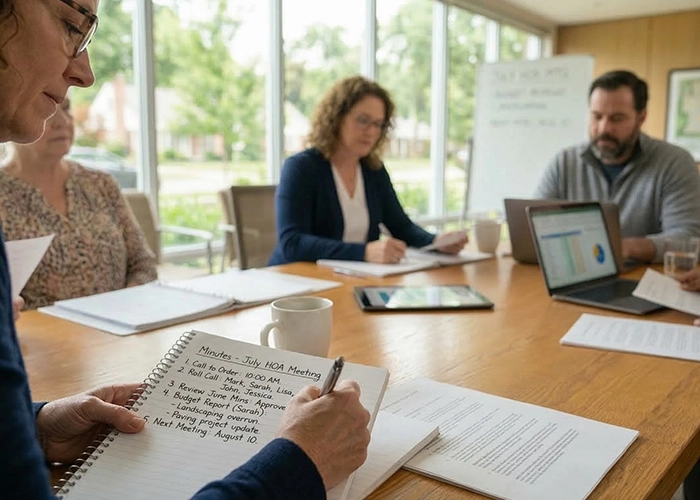
Meeting minutes provide structure and transparency within a homeowners association. Without a clear written record, misunderstandings can easily occur about what decisions were made or approved.
One important benefit is continuity. HOA boards often change over time as members rotate off and new volunteers step in. Accurate minutes allow new board members to understand past decisions, ongoing projects, and previously approved policies.
Minutes also protect the association from disputes. When conflicts arise, official records often become the first place people look to verify what happened during a meeting. A well-written record can clarify confusion and prevent disagreements from escalating.
Financial decisions, vendor approvals, and rule changes are examples of matters that should always be documented. These actions affect homeowners and the overall management of the community.
What Should Be Included in HOA Meeting Minutes
Good meeting minutes focus on clarity and accuracy. They should capture key details without becoming overly complicated.
The following information is commonly included in HOA meeting minutes:
Basic Meeting Information
Every set of minutes should begin with the basic details of the meeting.
This typically includes:
- Association name
- Type of meeting (board meeting, annual meeting, committee meeting)
- Date and time of the meeting
- Meeting location or virtual platform
- Name of the person presiding over the meeting
These details establish context for the record.
Attendance and Quorum
Minutes should document who attended the meeting. This usually includes board members, management representatives, and sometimes homeowners who were present.
It is also important to confirm whether a quorum was established. A quorum means the minimum number of board members required to conduct official business is present.
Without a quorum, most associations cannot legally vote on motions or make decisions.
Approval of Previous Minutes
Most meetings include a step where the board reviews and approves minutes from the previous meeting. This action should be recorded in the current minutes.
If corrections are made before approval, those changes should also be noted.
Motions, Decisions, and Votes
This is the most important part of meeting minutes. Any motion brought before the board should be documented clearly.
Minutes should typically include:
- The motion that was proposed
- The board member who made the motion
- The member who seconded the motion
- The result of the vote
For example, minutes may state that a motion was approved, rejected, or tabled for future discussion.
Reports and Updates
Many meetings include reports from officers, committees, or property managers. These may include financial updates, maintenance reports, or project progress summaries.
Minutes should provide a brief summary of these reports without recording every detail.
Adjournment
Finally, the minutes should note when the meeting officially ended. This marks the conclusion of the official record for that session.
What Should Not Be Included in Meeting Minutes
Many boards make the mistake of recording too much information. Meeting minutes are not transcripts.
The purpose of minutes is to document decisions, not discussions.
To keep records clear and professional, the following should generally be avoided:
- Personal opinions expressed during discussions
- Arguments or disagreements between board members
- Detailed conversation summaries
- Informal comments or off-topic remarks
Including these details can create unnecessary complications. In some cases, it may even expose the association to legal risks.
Keeping minutes concise and factual helps protect the board and the community.
Best Practices for Writing Clear HOA Meeting Minutes
Even when boards understand the basic requirements, writing effective minutes can still be challenging. Following a few best practices can help keep records organized and easy to understand.
Prepare a Simple Template
Using a consistent template makes it easier to record meeting details quickly. Templates help ensure that important information is not overlooked.
A typical template might include sections for attendance, agenda items, motions, and adjournment.
Consistency also helps homeowners review records more easily.
Write in a Neutral Tone
Meeting minutes should always remain neutral. The person recording the minutes should avoid inserting personal opinions or interpretations.
The focus should remain on documenting what occurred, not evaluating the discussion.
Neutral language also helps maintain professionalism.
Record Decisions Clearly
When motions and votes are recorded, clarity is essential. The language should be simple and direct so readers can understand the outcome without confusion.
For example, instead of describing a lengthy debate, minutes should simply state that the board voted to approve a landscaping contract.
This approach keeps the document focused on official actions.
Review Minutes Promptly
Minutes should be drafted soon after the meeting while details are still fresh. Waiting too long may lead to missing information or inaccuracies.
Once drafted, the minutes are usually reviewed by the board before being approved at the next meeting.
Prompt preparation helps ensure accuracy.
Legal Considerations for HOA Meeting Minutes
While meeting minutes may seem like simple administrative records, they can have legal importance.
Many states require homeowners associations to maintain official meeting records for a certain number of years. These records may need to be provided to homeowners upon request.
Minutes may also become evidence in legal disputes involving the association. For example, they might be used to verify whether a rule change was properly approved.
Because of this, accuracy matters. Incorrect or incomplete minutes can create confusion and potential liability.
Boards should also be aware of state open meeting laws. Some states require associations to provide homeowners with access to board meeting minutes within a specific timeframe.
Consulting with the association’s attorney or management company can help ensure compliance with local regulations.
How HOA Management Companies Help Maintain Accurate Records
Many associations rely on professional management companies to assist with meeting documentation.
Property managers often attend board meetings and help prepare official minutes afterward. Their experience can be valuable in ensuring that records follow proper standards.
Management companies also help store records securely and organize them for easy access. This becomes especially important for larger communities with extensive documentation.
Another benefit is consistency. When the same management team assists with meetings over time, recordkeeping practices remain stable even as board members change.
Professional guidance can make a significant difference in maintaining clear and reliable association records.
Clear Records Help Strong Communities
Clear documentation plays a quiet but powerful role in community governance. When HOA meeting minutes rules are followed consistently, boards build transparency and trust with homeowners.
Managing association records can feel overwhelming, especially for volunteer board members. A professional HOA management partner can help simplify the process and ensure your community stays compliant.
If your association needs guidance with meetings, documentation, or day-to-day operations, consider working with an experienced HOA management company that understands the unique needs of community associations.
Related Articles
Trending Now

Related Article
Sign up for Our Monthly Newsletter
Sign up below for monthly updates on all HOA Resource