Common HOA Management Mistakes and How to Avoid Them With Better Systems

Managing a homeowners association involves far more than collecting dues and enforcing rules. Board members and managers must deal with finances, coordinate with vendors, communicate with residents, plan maintenance work, ensure compliance with regulations, and maintain proper records.
Browse By Category
Sign up for Our Newsletter

Sign up for Our Newsletter
Trending Now


Managing a homeowners association involves far more than collecting dues and enforcing rules. Board members and managers must deal with finances, coordinate with vendors, communicate with residents, plan maintenance work, ensure compliance with regulations, and maintain proper records.
The Hidden Issues Behind HOA Management Problems
It’s a common mistake in HOA management to think that separate tools will work well together automatically. In reality, disconnected systems often produce information gaps that make management harder over time.
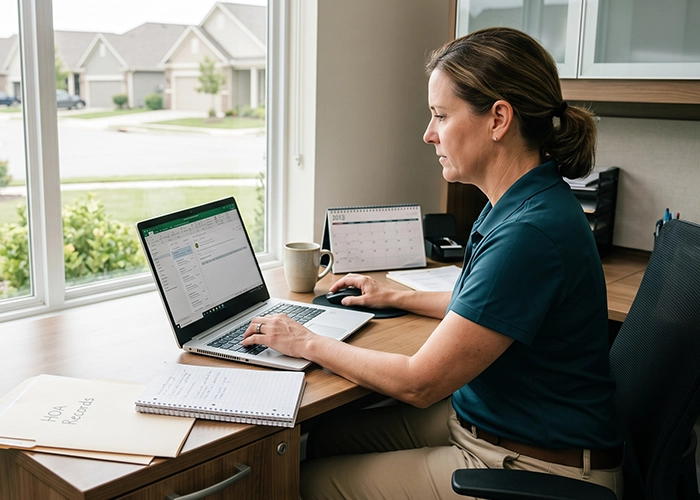
One board member might edit financial records on one system and another volunteer could send notices to homeowners on another. Maintenance requests may be tracked in spreadsheets while governing documents are kept somewhere else entirely. Soon no one has the full story of what is going on inside the community.
It gets especially hard when board members rotate off. Institutional knowledge is lost, passwords are forgotten and records are more difficult to locate. Even the best-run communities can start to slip when information is scattered too far.
The issue is not always poor leadership. In many cases, the tools themselves make management more complicated than it needs to be.
Relying on Too Many Separate Platforms

Many HOAs start small and then build systems as they grow. One platform for accounting, one platform for emails, one platform for documents. Eventually the board ends up juggling multiple subscriptions without realizing how much inefficiency they’ve created.
This setup usually leads to duplicate work. A homeowner payment may need to be entered into multiple systems manually. Resident contact information may become outdated because it is stored in different locations. Maintenance updates may not reach the people who need them most.
Over time, this fragmentation slows down response times and increases the risk of mistakes.
Common signs your HOA may be relying on too many disconnected systems include:
- Homeowners receiving inconsistent information
- Financial records needing manual updates in multiple places
- Missing maintenance requests
- Difficulty finding governing documents
- Long email chains with conflicting information
- Delayed board approvals
- Confusion during board transitions
These problems can be drastically reduced by putting everything into one centralized platform. There are many communities that are now using HOA-specific management systems that combine accounting, communication with homeowners, document storage, payment processing, and service tracking all into one place.
Platforms like PayHOA are designed specifically for associations that want fewer moving parts and more visibility across daily operations.
Poor Communication With Homeowners
Communication problems are one of the most common frustrations inside HOA communities. Residents want updates to be quick, clear and consistent. Trust often decreases when communication becomes scattered.
Some boards use personal email accounts or reply-all chains to share information. Some organizations still rely only on printed notices. These approaches might work when a community is small. However they become difficult to manage as the organization grows larger.
When homeowners miss important announcements it can lead to frustration and conflict. People feel overlooked if maintenance schedules shift without warning or if the board fails to share decisions in a clear way.
Strong communication usually comes down to consistency rather than volume. Residents do not necessarily expect constant updates, but they do want transparency.
HOAs can improve communication by focusing on a few key habits:
- Use One Central Communication Hub
Residents should know exactly where to check for updates, announcements, and documents. - Keep Messages Short and Clear
Long emails filled with technical language often create confusion instead of clarity. - Share Updates Before Problems Escalate
Homeowners appreciate proactive communication, especially during maintenance projects or emergencies. - Maintain Accessible Records
Meeting minutes, budgets, policies, and forms should be easy for residents to locate.
Centralized management software often helps eliminate communication gaps because information stays in one organized environment instead of being spread across separate apps and inboxes.
Delayed Financial Oversight

Financial management is one of the most important responsibilities within any HOA. Unfortunately, it is also an area where mistakes can become expensive very quickly.
Some associations use old bookkeeping methods or basic spreadsheets that create problems with reporting. Some organizations also depend too much on one treasurer or volunteer without setting up adequate checks and balances.
Using accounting software alone does not always solve the issue. Even popular platforms like QuickBooks struggle when financial records are separated from homeowner information, payment systems and board reporting features.
Common financial mistakes include:
- Delayed dues collection
- Incomplete reserve planning
- Missing invoices
- Poor budgeting visibility
- Limited audit preparation
- Inaccurate homeowner balances
- Slow financial reporting
Financial transparency matters because homeowners want confidence that association funds are being handled responsibly.
Boards should review financial reports regularly and make sure multiple individuals understand the overall financial process. Relying too heavily on one person creates unnecessary risk for the association.
Integrated HOA management systems help improve financial visibility by connecting payments, homeowner accounts, violations, and reporting tools on a single platform. When everything is in one place, staff members do not need to enter the same information multiple times. This reduces errors and makes it much simpler to prepare reports for meetings and audits.
Ignoring Long-Term Reserve Planning
Some HOA boards become so focused on immediate expenses that they neglect long-term reserve planning. They must balance current expenses with major repairs that will happen down the road. Communities should start setting aside money today for large projects such as roof replacements & parking lot repairs that will eventually require attention.
Roofs, roads, pools, elevators, clubhouses, and landscaping systems eventually require major investment. Without proper reserve funding, associations may face difficult special assessments later.
Reserve planning mistakes often happen gradually. Boards frequently delay necessary studies and underestimate how much repairs will cost. They also avoid raising dues when the situation calls for it. In the short term this approach keeps homeowners satisfied. Over time though, putting off proper planning creates serious financial problems that become harder to manage.
Communities should regularly evaluate:
- Roofing lifespan
- Pavement conditions
- Exterior maintenance needs
- Pool and recreation equipment
- Drainage systems
- Security infrastructure
- Lighting systems
Accurate recordkeeping becomes critical during reserve planning. Associations that keep maintenance histories, vendor records, and financial reports centralized often make stronger long-term decisions.
Failing to Document Processes

Many HOA communities operate based on verbal knowledge instead of documented procedures. This creates major problems during leadership transitions.
A board president may know how to handle vendor approvals, but nobody else understands the process. A treasurer may store financial instructions privately. Maintenance schedules may exist only inside email conversations.
When volunteers leave the board, valuable operational knowledge disappears with them.
Documented systems help communities remain stable regardless of leadership changes.
Important HOA procedures that should always be documented include:
- Vendor approval processes
- Payment authorization procedures
- Maintenance request handling
- Violation enforcement steps
- Meeting preparation workflows
- Budget planning timelines
- Emergency communication plans
Cloud-based HOA platforms help organize this information more effectively because documents, conversations, approvals, and records remain accessible in one location.
Waiting Too Long to Modernize Operations
Another common HOA management mistake is assuming that older systems are “good enough” simply because they still function.
Many communities put off modernizing their systems because the change feels too difficult. Board members worry about training staff, paying for new systems and spending time on implementation. The problem is that old processes actually cost more money in the long run through hidden expenses that nobody notices at first.
Manual work increases labor demands. Communication delays frustrate homeowners. Record retrieval becomes slower. Financial reconciliation takes longer. Vendor coordination becomes harder to track.
Modern HOA management software is designed to reduce administrative burden rather than add to it.
Features often include:
- Online dues payments
- Automated reminders
- Digital document storage
- Resident portals
- Maintenance request tracking
- Board communication tools
- Financial reporting dashboards
- Secure cloud access
Instead of jumping between accounting software, email systems, spreadsheets, and shared folders, boards can manage operations from one environment.
That centralized structure often improves both efficiency and homeowner satisfaction.
Overlooking Cybersecurity and Data Protection

As HOAs rely more heavily on digital systems, cybersecurity becomes increasingly important. Many associations store sensitive homeowner information, including addresses, payment histories, financial records, and legal documents.
Unfortunately, some boards still use unsecured personal email accounts or shared passwords across multiple volunteers.
This creates unnecessary exposure.
Basic cybersecurity practices can help protect association data significantly:
- Use strong passwords
- Enable multi-factor authentication
- Limit admin access
- Store documents securely
- Remove former board member access promptly
- Avoid sharing sensitive information through unsecured email threads
Centralized management systems often provide stronger security controls than scattered consumer-grade tools.
This becomes especially valuable during board transitions or management company changes.
Poor Vendor Coordination
Vendor management becomes difficult when communication is inconsistent. Landscaping companies, maintenance crews, pool contractors, and security vendors all need proper coordination and documentation to work effectively together.
Without centralized tracking, service requests may fall through the cracks.
Some communities rely heavily on phone calls or text messages for vendor communication. While convenient at first, this often creates confusion later when nobody can verify timelines, approvals, or completed work.
Organized vendor management should include:
- Service request tracking
- Approval documentation
- Contract storage
- Invoice monitoring
- Maintenance history logs
- Scheduling visibility
Keeping this information centralized allows boards to make better decisions and respond more quickly when issues arise.
Inconsistent Rule Enforcement

Few things frustrate homeowners more than inconsistent enforcement. If one homeowner receives a violation notice while another does not, trust in the board can weaken quickly.
Tracking System Issues Lead to Inconsistency
Incomplete tracking systems are a common reason why inconsistency occurs. Different board members may document violations in different ways. Records might be stored in inconsistent locations or lost entirely.
Clear processes help reduce disputes.
Associations should:
- Apply rules evenly
- Document all violations carefully
- Maintain communication records
- Use standardized notices
- Track timelines consistently
Digital management platforms often simplify enforcement because notices, communications, and records remain organized automatically.
This creates stronger documentation if disputes ever arise.
Burnout Among Board Members
Many HOA board members are volunteers balancing community responsibilities alongside work, family, and personal obligations. Burnout becomes common when systems are inefficient or disorganized.
If simple tasks require hours of manual work, volunteer fatigue increases quickly.
Board burnout often shows up through:
- Delayed responses
- Missed meetings
- Poor follow-through
- Communication breakdowns
- High turnover rates
Technology alone does not solve burnout, but streamlined systems can reduce administrative stress significantly.
When information is easier to access and workflows become more organized, boards can spend less time managing paperwork and more time focusing on community improvement.
How Centralized HOA Management Systems Help
Modern HOA management platforms are becoming more popular because they address many of the operational problems associations face daily.
Instead of relying on separate accounting software, email platforms, spreadsheets, and shared drives, centralized systems bring operations together in one place.
This creates several important benefits:
Better Visibility
Board members can view finances, maintenance requests, documents, and communications without switching between platforms.
Faster Communication
Residents receive updates more consistently through centralized communication tools.
Improved Recordkeeping
Important files remain organized and accessible during leadership transitions.
Easier Financial Tracking
Payments, homeowner balances, and financial reports stay connected.
Reduced Administrative Work
Automation helps reduce repetitive manual tasks.
Stronger Homeowner Experience
Residents benefit from easier payments, clearer updates, and faster response times.
For many associations, the goal is not simply adding more technology. The real goal is reducing friction and creating a smoother experience for both board members and homeowners.
Building a Stronger HOA Starts With Better Organization
Communities that rely on scattered tools often spend more time solving preventable problems. Bringing operations into one organized platform can reduce confusion, improve transparency, and help boards focus more on serving residents effectively.
If your association is dealing with administrative overload or disconnected systems. PayHOA can help simplify operations, improve communication, and keep your community running more efficiently.
Related Articles:
- The Importance Of Communication Through HOA Software
- Digital Tools for HOA Communities in the Modern Age
- Problems Of New HOA Board Members No One Talks About
Trending Now

Related Article

Sign up for Our Monthly Newsletter
Sign up below for monthly updates on all HOA Resource