

Fort Collins, Colorado: HOA proposes use of hogs to control tumbleweeds
KUNC | By Ken Amundson, BizWest
Browse By Category
Sign up for Our Newsletter

Sign up for Our Newsletter
Trending Now


KUNC | By Ken Amundson, BizWest
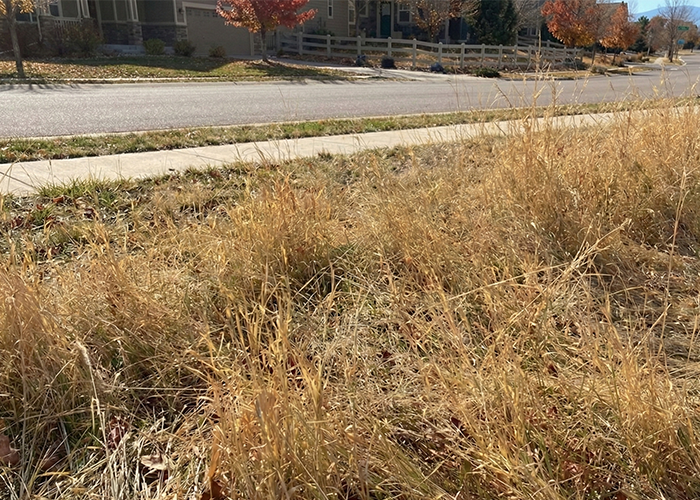
A Fort Collins homeowners association, struggling to control invasive weeds in its open areas, has sought permission from the city to use Large Black Hogs on about a half acre of its property.
AloTerra Restoration Services Inc., on behalf of the Rigden Farm Homeowners Association located at 2920 Caspian Way in east Fort Collins, presented its plan for conceptual review at the City of Fort Collins Thursday. Conceptual review precedes formal application, and no decisions are rendered, although city staff poses questions and provides guidance to entities seeking projects or variances.
Rigden Farm has worked for several years to control weeds of numerous sorts on the property. Under AloTerra direction, it has used numerous approaches, depending on the weeds to be eradicated. Like many HOAs, Rigden is working toward the dual goal of controlling weeds and reducing the amount of acreage subject to irrigation.
Christof Meyer, president of AloTerra, said the HOA has struggled in particular with one weed: kochia. That weed, commonly known as tumbleweed, is not listed by the state of Colorado as a noxious weed, but it is invasive; it originated in Asia, but it grows over a large area of the globe.
Kochia is difficult because it grows up to 6-feet tall and sends down roots up to 16 feet underground. When it dries up, the stem breaks off at ground level, and the plant rolls in the wind, distributing thousands of seeds that can exist on the property for years, AltoTerra wrote in its proposal to the city.
“It’s imperative to reduce the seed bank prior to any disturbance that occurs during revegetation activities,” AloTerra wrote in its proposal. Tilling of the soil to prepare for reseeding can cause weed seeds underground to sprout and grow.
Meyer told BizWest that hogs were selected, instead of goats that are commonly used for weed control, because goats eat surface plants; hogs dig and eat the roots of plants.
Hogs have been used since medieval England to control weeds in fields, Meyer said. “That’s how Mother Nature intended this to happen,” he said. “Restorative agriculture requires use of animals,” he said.
Meyer, who operates a diversified farm in north Boulder County, would make about eight or 10 Large Black Hogs available to the project. They would be confined to a pen about 1/16th of an acre in size. The pen would be moved every couple of weeks to address more of the half-acre site. Grazing would be limited to seven months a year, from April through October.
Metal shelters would be used on the site so that the hogs can get out of the weather. The shelters also help with noise abatement, as does moving the hogs periodically. Hogs are curious animals that tend to make more noise when bored; moving them permits them to explore new areas.
Minimal odors are expected, AloTerra wrote, but the hogs will help to fertilize the site as the soil is restored for native grass planting.
The process will require up to five years, Meyer said. Once the hogs eradicate the kochia, then seeding of native grasses can occur.
Meyer said residents of the HOA are fully on board with the project. The nearest house to the half-acre site is about 75 to 100 feet away.
“Literally everyone enjoys the introduction of animals into solving problems,” he said.
Trending Now

Related Article



Sign up for Our Monthly Newsletter
Sign up below for monthly updates on all HOA Resource