
HOA Emergency Repairs: What Every Board Should Know
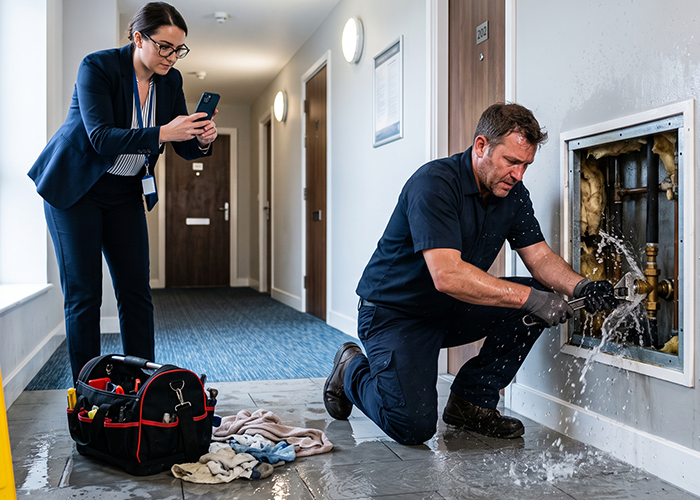
Emergencies can happen without warning. Having a clear plan for emergency repairs helps protect residents, reduce damage and costs, and keep your HOA running smoothly.
Browse By Category
Sign up for Our Newsletter

Sign up for Our Newsletter
Trending Now

Emergencies can happen without warning. Having a clear plan for emergency repairs helps protect residents, reduce damage and costs, and keep your HOA running smoothly.
What Counts as an Emergency?
Not every repair requires immediate action. A broken light in a clubhouse may be inconvenient, but a major water leak, exposed electrical wiring, or a fallen tree blocking a community road can create an immediate safety or property risk.
The challenge for many boards is knowing where to draw that line. An emergency repair generally involves a condition that threatens people, property, essential services, or the continued use of an important common area.
Some common examples include:
- Burst or severely leaking pipes in common areas
- Major water intrusion or flooding
- Gas leaks or suspected gas leaks
- Electrical hazards
- Fallen trees blocking roads or damaging structures
- Significant roof damage
- Structural damage that creates a safety concern
- Broken gates or security systems that leave the community vulnerable
- Sewer backups
- Major storm or fire damage
- Dangerous damage to sidewalks, roads, stairs, or other shared areas
- Loss of essential community systems
The exact definition can vary from one association to another. State law, governing documents, insurance requirements, and the type of property involved can all affect how an emergency should be handled.
That is why boards should not rely on a general definition alone. The association’s governing documents should be reviewed before an emergency occurs so everyone understands who is responsible for what.
Why Fast Action Matters
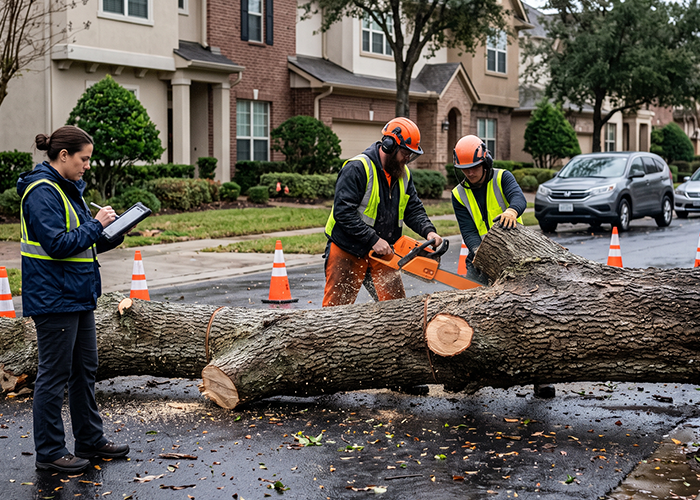
When a serious problem develops, waiting for a regular board meeting may not be practical. A small leak can spread through walls and flooring, while a damaged electrical component can become a serious safety hazard.
Quick action does not mean making careless decisions. It means taking reasonable steps to protect people and property while following the authority given to the board, manager, and vendors.
HOA’s emergency planning guidance recommends having a response plan that addresses repairs, vendors, communication, debris removal, and post-emergency recovery. Having these details prepared in advance can make the response much more organized when something actually goes wrong.
For example, imagine that a large tree falls across a private HOA road during a storm. The board may not have time to gather multiple bids before the road can be safely reopened. The immediate priority is to protect residents and restore safe access, while documentation and additional vendor review can follow.
The goal is not simply to fix the problem quickly. The goal is to stop the problem from becoming worse.
Know What the HOA Is Responsible For
One of the biggest sources of confusion during an emergency is responsibility.
A homeowner may report water coming through a ceiling and assume the HOA must handle everything. However, the source of the water, the location of the damaged component, and the association’s governing documents may determine who is actually responsible.
Generally, HOAs are responsible for maintaining common areas and other components assigned to the association by its governing documents. Homeowners are often responsible for portions of their individual property, but the division is not always simple.
This distinction becomes especially important when emergency repairs involve both common and individual property.
Consider a condominium with a burst pipe inside a shared wall. The association may have responsibilities for the building’s plumbing or structural components, while the unit owner may have responsibilities for personal belongings or certain interior finishes. The documents and applicable law should guide the response.
Boards should avoid making assumptions based only on where the damage appears. The source of the problem may be somewhere else.
Create an Emergency Repair Plan Before You Need It

The worst time to decide how your HOA handles emergencies is during the emergency itself.
A basic emergency repair plan gives board members, managers, vendors, and residents a clear path to follow. It also reduces the chance that an important step will be forgotten when everyone is dealing with pressure.
An effective plan should address:
- Who should receive emergency reports
- Which situations qualify as emergencies
- Who has authority to contact vendors
- Which vendors should be contacted first
- How after-hours calls will be handled
- When the board president or other officers should be notified
- How homeowners will receive updates
- How repairs and expenses will be documented
- How insurance claims will be reported
- Where emergency records will be stored
The vendor portion deserves special attention. A list of contractors is useful, but a list with current contact information, service areas, emergency hours, and areas of expertise is much more valuable.
It is recommended to keep several vendors available when possible because demand for contractors can increase sharply after storms and other major events.
It is also helpful to review the plan periodically. Phone numbers change, contractors stop serving certain areas, and board members transition in and out of office.
Establish Clear Emergency Procedures
A good emergency process should be simple enough to follow when someone is under stress.
A practical response might look like this:
- Identify the immediate danger. Determine whether people need to leave the area or whether emergency services should be contacted.
- Protect people and property. Take reasonable temporary measures, such as restricting access to a dangerous area.
- Contact the appropriate emergency vendor. Use the association’s approved emergency contact list.
- Notify the appropriate board members or manager. Follow the authority outlined in the association’s emergency plan.
- Document the condition. Take photographs, record the time, and write down what was observed.
- Contact the insurance carrier when appropriate. Follow the policy’s claim reporting requirements.
- Communicate with affected homeowners. Provide clear information about what happened and what residents should expect.
- Monitor the repair. Confirm that the immediate hazard has been addressed and determine whether additional work is needed.
This process may need to be adjusted based on the type of emergency. A plumbing failure will not be handled exactly like a structural concern or storm-related damage.
The important part is having a process that everyone understands before the phone starts ringing.
Keep Emergency Vendors Ready
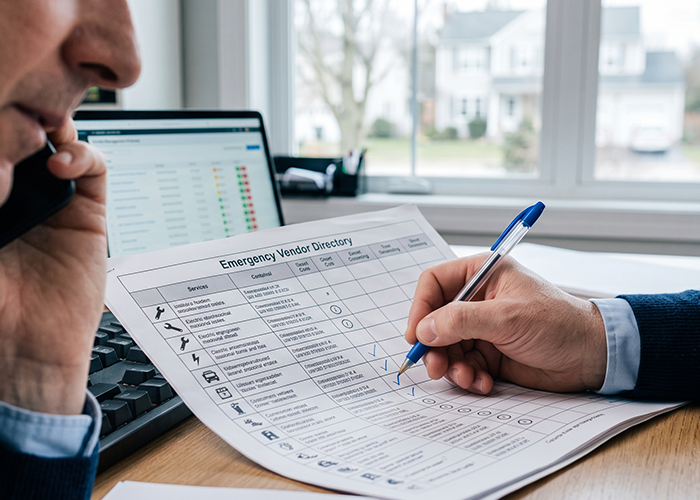
Vendor relationships can make a major difference during an emergency.
An HOA that has already established relationships with reliable contractors is often in a better position than one that starts searching for a plumber, electrician, roofer, or restoration company after the damage occurs.
Boards should consider maintaining relationships with vendors in areas such as:
- Plumbing
- Electrical work
- Roofing
- Water mitigation
- Tree removal
- Restoration
- HVAC
- Locksmith services
- Security systems
- General contracting
- Landscaping and storm cleanup
Emergency availability should be confirmed before a vendor is placed on the association’s emergency list. A contractor who normally performs excellent work may not provide after-hours service.
It is also important to understand the vendor’s pricing structure. Emergency work may involve higher labor rates, after-hours charges, equipment fees, or minimum service charges.
Those costs do not necessarily mean the vendor is overcharging. Emergency work often requires a faster response and work outside normal business hours. Still, boards should understand these terms before an emergency occurs.
Emergency Repairs and Board Authority
Emergency situations can create difficult governance questions.
A board may need to approve a repair quickly, but the association’s normal purchasing process may require multiple bids or board approval. Whether those procedures can be bypassed depends on the governing documents, state law, and the circumstances involved.
Some communities have specific emergency provisions that allow certain action without waiting for a full board vote. Other communities may have more limited authority.
This is one reason an HOA should review its documents before an emergency occurs. The board should know what authority exists and where the limits are.
In some jurisdictions, special emergency powers may also apply after a formally declared disaster. These powers vary by state and should not be assumed to apply to every repair situation. For example, Florida law provides certain emergency powers to associations following a qualifying declared state of emergency, subject to statutory and governing-document requirements.
When there is uncertainty about the board’s authority, legal counsel should be consulted. An emergency may require fast action, but the board still has a duty to act in the association’s best interest.
Document Everything During an Emergency
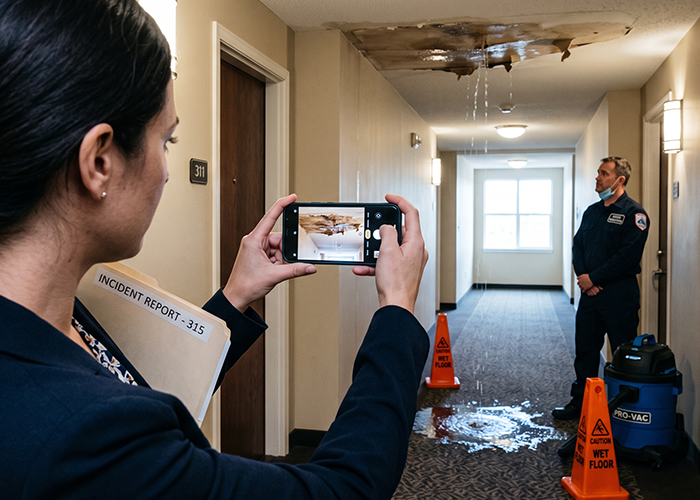
Documentation may be the last thing on someone’s mind when water is pouring through a ceiling or a tree has fallen across a road.
It is also one of the most important things to remember.
Take photographs and videos before cleanup begins whenever it is safe to do so. Record the date and time, describe the damage, save vendor communications, and keep copies of estimates, work orders, invoices, and receipts.
A basic emergency repair file should include:
- Date and time the problem was reported
- Name of the person who reported it
- Description of the problem
- Photographs or videos
- Vendor contact information
- Emergency authorization or approval
- Estimates and invoices
- Work orders
- Insurance claim information
- Copies of relevant communications
- Description of temporary repairs
- Description of permanent repairs
- Final inspection or completion information
Detailed records can help the association explain why a particular decision was made. They can also become important when dealing with an insurance carrier or reviewing the association’s financial records.
FEMA guidance emphasizes the importance of documenting disaster-related damage, including photographs, descriptions, locations, costs, and records showing the work performed.
Even when FEMA assistance is not involved, the same habit is useful for an HOA.
Protect the Association’s Insurance Position
Emergency repairs and insurance can become complicated quickly.
The association should understand what its master insurance policy covers before a loss occurs. This includes knowing applicable deductibles, covered property, exclusions, reporting requirements, and any requirements related to emergency mitigation.
When damage occurs, the HOA should generally follow the policy’s claim procedures and communicate with its insurance representative as soon as appropriate.
Boards should also be careful about authorizing extensive permanent work before the damage has been properly evaluated. Temporary measures may be needed to prevent additional damage, but the permanent scope of work may need to be reviewed by an adjuster, engineer, contractor, or other professional.
Documentation is especially important here. FEMA materials, for example, identify photographs, damage descriptions, cost information, insurance records, and repair documentation as useful evidence when disaster-related damage is being evaluated.
The association should also avoid assuming that every emergency expense will be reimbursed. Coverage depends on the policy and the specific circumstances of the loss.
How HOA Reserves Can Help
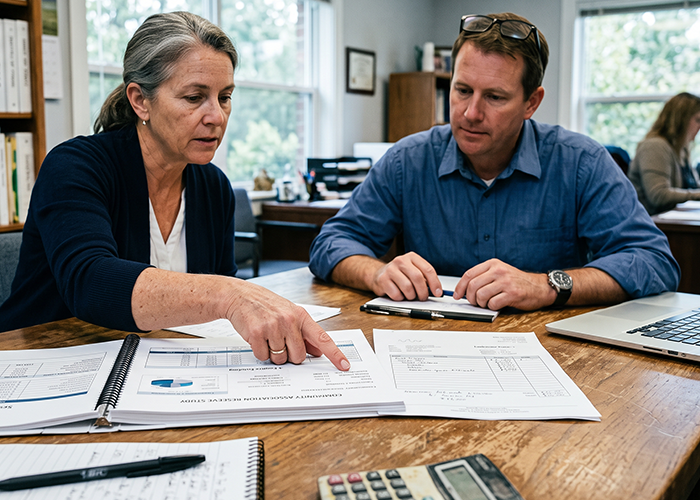
Emergency repairs can place unexpected pressure on an association’s budget.
A major roof failure, storm cleanup, or building repair can cost much more than the board expected to spend in a normal month. Without adequate planning, the association may have to make difficult financial decisions at an already stressful time.
Reserve funds are generally intended for major repairs, replacements, and capital expenses involving common elements. Reserve funds can also provide financial support when an association faces unexpected repair needs.
However, boards should not treat reserves as an unlimited emergency account.
The governing documents, reserve study, applicable law, and the association’s financial policies should all be considered before funds are moved or spent. If an emergency creates a financial shortfall, the board may need to consider other lawful funding options.
Some communities may have authority to levy a special assessment or borrow funds under certain circumstances. The rules vary, so the board should obtain professional guidance when the financial impact is significant.
Communicate With Homeowners
During an emergency, homeowners often become frustrated when they do not know what is happening.
Silence can quickly lead to speculation. Residents may assume that nothing is being done when, in reality, the board or management company is working with vendors behind the scenes.
A short update can make a significant difference.
For example, residents could be told that a water issue has been reported, a licensed contractor has been contacted, and another update will be provided once the source of the problem has been identified.
The message does not need to include every detail. It simply needs to provide useful information without promising something the board cannot guarantee.
HOA service requests also emphasizes that homeowners want to know their concerns have been acknowledged and that regular updates can reduce frustration and unnecessary conflict.
For larger emergencies, communication may need to cover access restrictions, temporary closures, safety instructions, expected repair timelines, and changes to normal community operations.
Temporary Repairs vs. Permanent Repairs
Emergency work often has one immediate purpose: stop the damage or remove the danger.
That does not necessarily mean the underlying problem has been permanently fixed.
For example, a contractor may place a temporary covering over a damaged roof after a severe storm. That step may prevent additional water from entering the building, but a full roof assessment and permanent repair may still be required.
The same principle applies to plumbing, electrical systems, landscaping, roads, and structural components.
Boards should make sure temporary repairs are documented and followed by an appropriate inspection or permanent repair plan. Otherwise, a temporary solution can quietly become a long-term problem.
This is especially important when the emergency exposes a larger maintenance issue. A recurring leak, failing drainage system, or aging electrical component may require more than a quick repair.
Preventing Emergency Repairs Through Routine Maintenance
Not every emergency can be prevented.
Storms, accidents, fires, and sudden equipment failures can happen even in well-maintained communities. Still, routine maintenance can reduce the number of avoidable emergencies.
Regular inspections help HOA boards spot potential problems early, prevent avoidable failures, and keep community assets safe, functional, and well-maintained.
Boards should pay attention to areas such as roofs, drainage systems, trees, sidewalks, roads, plumbing, electrical equipment, gates, fences, and other shared infrastructure.
A good maintenance program also helps the association plan financially. When a component is nearing the end of its useful life, the board can budget for replacement instead of waiting for failure.
Preventive maintenance may not always be exciting. It is much easier to approve a planned repair than to explain why an avoidable emergency has suddenly created a large expense.
Common Mistakes to Avoid
Emergency repairs can put boards under pressure, but a rushed response does not have to become a disorganized response.
Some common mistakes include:
- Assuming every repair is the HOA’s responsibility
- Waiting too long to address an obvious safety hazard
- Hiring an unknown contractor without checking credentials
- Failing to document damage before cleanup
- Forgetting to notify the insurance carrier
- Spending reserve funds without confirming they can be used for the expense
- Making promises about repair timelines that cannot be guaranteed
- Failing to communicate with affected homeowners
- Treating a temporary repair as a permanent solution
- Ignoring the underlying maintenance issue after the emergency is resolved
Another common mistake is failing to review the response afterward.
Once the emergency has passed, the board should ask what worked, what did not, and what should change. Perhaps a vendor did not answer after hours. Maybe residents did not know who to contact. Perhaps the emergency contact list was outdated.
These lessons can make the next response much easier.
A Simple HOA Emergency Repair Checklist
Boards can keep a short checklist with their emergency plan for quick reference.
Before an Emergency
- Review governing documents and emergency authority.
- Maintain an updated emergency vendor list.
- Confirm vendor insurance and licensing where applicable.
- Review the association’s insurance policies.
- Keep emergency contact information current.
- Review reserve funding and emergency budget procedures.
- Establish a homeowner communication process.
- Inspect common areas and major community assets regularly.
During an Emergency
- Address immediate safety concerns.
- Contact emergency services when necessary.
- Protect the property from further damage when it is safe to do so.
- Contact the appropriate vendor.
- Notify the manager and designated board members.
- Photograph and document the damage.
- Notify the insurance carrier when appropriate.
- Keep affected residents informed.
After the Emergency
- Confirm the immediate danger has been resolved.
- Review the permanent repair requirements.
- Collect invoices and supporting documents.
- Track all emergency-related expenses.
- Complete insurance claim requirements.
- Communicate the repair status to homeowners.
- Review the emergency response.
- Update the association’s emergency plan if needed.
Keep Your HOA Ready for the Unexpected
HOA emergency repairs are easier to manage when the board is prepared before something goes wrong.
The goal is not to predict every emergency. It is to make sure your community has a practical plan for handling the ones that cannot be predicted.
Explore our directory to find the right property management partner to help your board coordinate vendors, track repairs, streamline communication, and keep emergency procedures organized. Start exploring now!
Related Articles:
- Can A Homeowner Benefit From Property And Casualty Insurance?
- HOA Violation Laws Per State
- 5 HOA Maintenance Plans You Must Have
Trending Now

Related Article


Sign up for Our Monthly Newsletter
Sign up below for monthly updates on all HOA Resource