

HOA Snow Fences: How and Where to Install Them
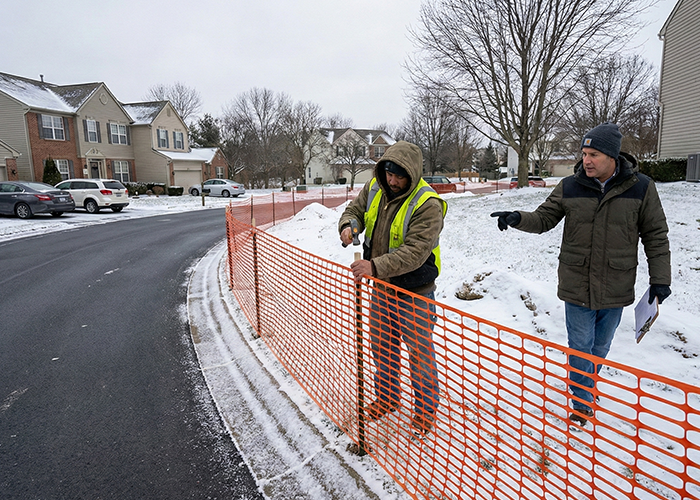
Winter problems in a community rarely start with the big storm. Most of the trouble shows up later, when the wind keeps moving snow into the same places again and again. HOA snow fences give your site a predictable place for that snow to land, so roads, walks, and parking areas are easier to manage.
Browse By Category
Sign up for Our Newsletter

Sign up for Our Newsletter
Trending Now


Winter problems in a community rarely start with the big storm. Most of the trouble shows up later, when the wind keeps moving snow into the same places again and again. HOA snow fences give your site a predictable place for that snow to land, so roads, walks, and parking areas are easier to manage.
Why HOA Snow Fences Matter
A clean plow route can still turn into a mess when wind pushes light snow back onto pavement. Drifts build fast near open fields, long driveway runs, and the edges of large parking lots. Complaints usually follow, along with extra plowing and a bigger slip-and-fall worry.
Better control also helps the budget. A fence that shifts drifting away from problem spots can cut repeat visits and reduce the need for heavy cleanup after each windy day. HOA snow fences also support safer sight lines when they are placed with care, since drift piles get kept away from corners and entrances.
How Snow Gets Trapped

A snow fence is not supposed to “block” snow like a wall. Air needs to pass through it. That airflow change slows the wind just enough for snow to drop where you want it, instead of where it causes trouble.
Porosity matters because it shapes the drift. A fence that is too solid tends to dump snow right at the fence and can create steep piles. A fence with the right amount of open space spreads storage out in a more stable pattern, with the biggest pile forming downwind.
Finding the Drift Before It Forms
Good placement starts with one simple question: where is the snow coming from? Most sites have a “snow source” area, like a flat field, an empty lot, or a wide stretch of turf that stays exposed to wind. That upwind space is often called the fetch, and it can tell you a lot about how much drifting you may see.
A quick site walk on a windy day can be more useful than a long meeting. Existing drift lines often show up along curbs, at the ends of buildings, and near gaps between structures. Old plow piles can hide the pattern, so late fall visits usually give the clearest read.
Setback Distance Makes or Breaks Results
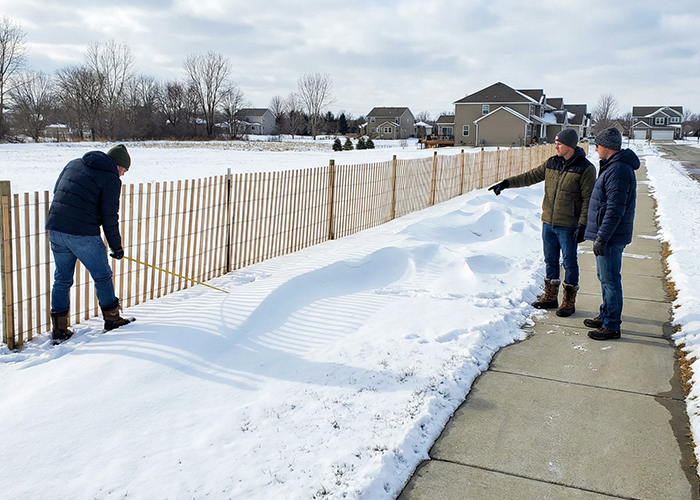
Distance matters because the drift needs room to form. When a fence sits too close to the area you are trying to protect, the drift can spill into the very space you wanted to keep clear. The “drift zone” should land in a place where storage is acceptable, such as an unused strip of turf or a dedicated snow storage area.
On flat ground, many snow fence guides use a setback measured as a multiple of fence height. The practical takeaway is simple: taller fences need more room, and a small shift in distance can change where the drift ends up. Space constraints inside an HOA often mean the best option is a modest fence in a smart spot, instead of a tall fence with nowhere for the snow to go.
Spots Around an HOA That Often Need Help
Parking areas get hit hard because they offer a wide, open surface for wind to sweep across. Islands, end stalls, and sidewalk connections near parking rows also tend to collect drifts. Entry drives can be another pain point, especially when the approach is open on the upwind side.
Pedestrian routes deserve equal attention. Bus stops, mail kiosks, clubhouse walks, and paths between buildings all attract foot traffic. A controlled drift area away from those routes can lower the chance of packed snow turning into ice where people step every day.
Ownership Lines and Permissions
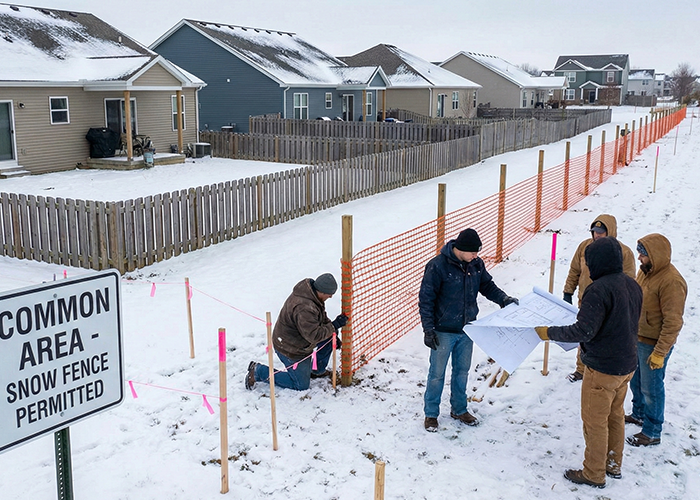
Placement decisions should match the community’s boundaries. Common areas usually offer the cleanest path, since the board can approve the work without negotiating access. Private lots, easements, and city right-of-way areas add another layer of permission, and those details can slow the schedule if they are discovered too late.
A paper trail helps here. Approval language in meeting minutes, vendor scopes, and site plans makes future seasons easier, especially if the fence becomes a repeating winter practice. A short note about the planned drift area can also prevent the “why is there a snow pile on my lawn” argument in January.
Fence Types That Fit Community Needs
Here are some fences that would benefit your community.
Temporary Fences for Seasonal Use
Many communities start with temporary fencing because the commitment stays low. Plastic or slatted fence rolls come down in spring, and storage happens off-season. That approach works well in communities where aesthetics matter and where the drift problem shows up only in specific wind directions.
Durability still matters, even for temporary options. Flimsy posts and loose ties turn into mid-season repairs, and sagging sections can reduce performance. A stronger setup often costs a bit more upfront, yet it tends to save time during the first big wind event.
Permanent HOA Snow Fences for Repeat Drift Areas
A permanent fence can make sense in the same way a permanent guardrail makes sense. A consistent drift location near a road, a long open edge, or a service drive can justify a fence that stays up year-round. Visual standards may require a more finished look, so materials and color choices should match community guidelines.
Long-term placement should be chosen carefully. A permanent fence that sends a drift into a drainage swale or across a trail can create a new problem. Site mapping and a simple “where will the drift sit in February” check can prevent that headache.
Design Details That People Miss
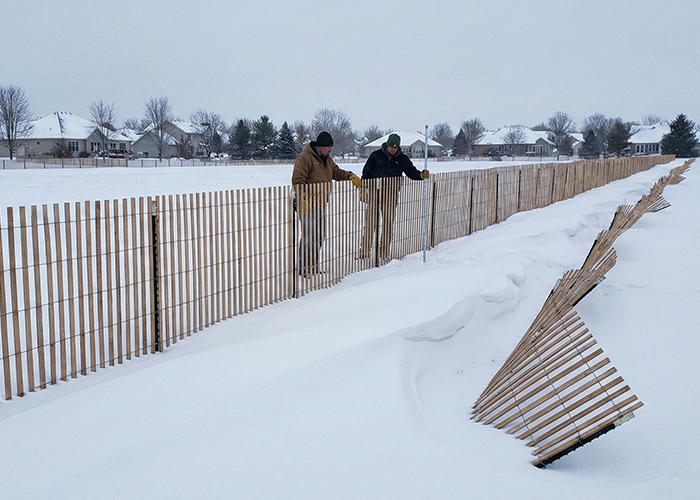
Fence height drives storage, yet height alone does not solve the problem. A fence that is too short may fill quickly during a windy winter, and a fence that is too tall may require more setback than the site can provide. A balanced height that matches the available drift area often wins in an HOA setting.
Bottom gap is another detail that affects how snow settles. Many guides suggest keeping the fence off the ground so snow does not pile up right at the base. That small clearance also helps when early storms arrive before the ground freezes solid.
Length matters more than most people expect. Wind rarely hits at a perfect right angle, so snow can curl around the ends of a fence. Extra length beyond the protected area can reduce that “end run” effect and keep drifts from sliding into the space you hoped to keep clear.
Safety and Visibility Should Lead the Plan
Entrances, intersections, and driveway tie-ins deserve a conservative approach. Snow that piles near a corner can block a driver’s view of cars, kids, or pedestrians. A fence that works perfectly for drift control can still be a poor choice if it creates a sight line hazard.
Emergency access also needs a seat at the table. Hydrants, fire lanes, and gate equipment should stay reachable during heavy snow. Placement that keeps drifts away from those features can save a scramble during a late-night callout.
Pre-Install Planning Saves Midwinter Repairs
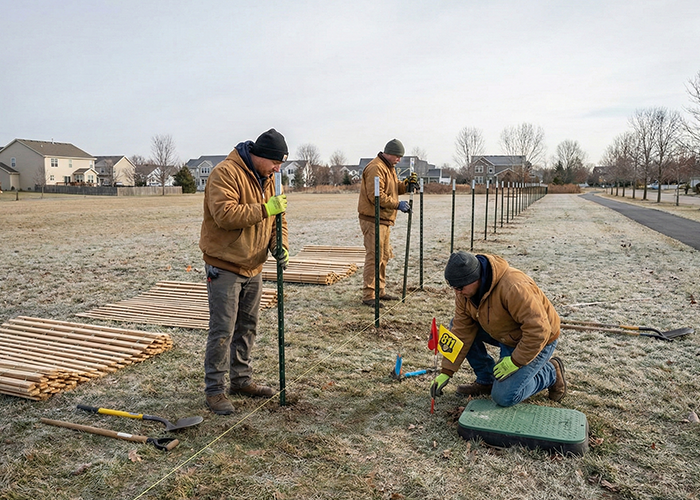
A tight installation depends on the schedule. Posts usually go in before the ground locks up, especially in colder zones. That timing also gives your team a better chance to align the fence cleanly and avoid rushed work right before the first storm.
Utility locating should be treated as non-negotiable. Irrigation lines, lighting conduit, and shallow services can run through the same open strips where a fence seems “obvious.” A quick locate step prevents a small winter project from becoming a spring restoration bill.
Vendor scope language should be specific. The fence line, post spacing, tie method, and removal plan all belong in writing. Clear scope also protects the community if a section fails and needs attention during the season.
A Straightforward Installation Approach
Questions about how to install HOA snow fences usually come up when the first shipment arrives and the team is staring at a roll of mesh and a pile of posts. A clean setup starts with layout lines, consistent post spacing, and a fence that stays taut. Small shortcuts at install time often show up later as sagging, leaning, or torn sections.
A simple field routine tends to work well:
- A straight reference line gets set with stakes and string.
- Posts get driven to a consistent depth and aligned before fencing is attached.
- Fence material gets fastened with steady tension, then checked again after a windy day.
Seasonal removal deserves planning too. Stored fencing lasts longer when it is dry, rolled neatly, and kept out of sunlight. Hardware should be kept with the fence rolls, so next fall does not turn into a scavenger hunt.
Managing the Fence During the Season
Wind and snow can shift hardware over time. A quick inspection after major storms often catches problems early, before a loose section turns into a full failure. Repair time is usually far lower than replacement time, especially when drift piles make access harder.
Snow storage should stay on the board’s radar. A fence that is doing its job will create a predictable pile, and that pile may need a plan for melt and runoff. Drainage flow in spring can change if large drifts sit in the wrong place, so the drift area should avoid low spots where water already struggles.
End-of-season timing matters too. Early removal can reduce damage from late storms, while late removal can make cleanup harder if mud season arrives fast. Local weather patterns should guide that call more than the calendar.
Living Options for a Long-Term Look
Living HOA snow fences usually work best when they are designed, not improvised. Plant height, density, and spacing shape performance the same way fence height and porosity do. Many designs rely on multiple rows so the planting can slow wind without acting like a solid wall.
Time should be treated as part of the cost. A new planting may help a little in early years, but full performance often comes later. In the meantime, a temporary fence can bridge the gap and keep the drift problem under control.
Maintenance in the early years is the make-or-break factor. Weed control, watering, and protection from wildlife can keep young plantings alive long enough to become useful. That effort pays off when the community gets a fence that does not need seasonal takedown.
Budget Talk That Keeps Bids Honest
Cost planning works best when the board separates “materials” from “seasonal effort.” A low-cost fence with repeated repairs can cost more than a sturdy fence that stands up all winter. Labor also shifts based on site access, especially if fences sit behind buildings or across uneven ground.
Bid packages should include a clear definition of success. A vendor should know the goal is drift control, not just “put up fence.” Site photos, drift maps, and expected drift storage areas make it easier to compare bids and avoid vague promises.
Reserve planning can help, even for seasonal systems. Replacement cycles exist for fencing, posts, and hardware. A small annual line item can prevent a scramble when the fence reaches the end of its usable life.
Resident Communication That Reduces Pushback
A short explanation can change how people react. Residents tend to accept a drift pile when they know it protects the drive lane and reduces repeat plowing. That message also helps when someone assumes the fence is “blocking their view” for no reason.
Parking guidance often needs a reminder. Temporary signs or a quick note about snow storage zones can keep cars out of drift areas and reduce towing disputes. Consistency matters here, so the same message should show up each season.
Feedback collection can stay simple. A short post-storm check-in with maintenance staff can reveal what worked and what did not. Those notes make next year’s plan easier, especially if wind patterns shift across different parts of the property.
Winter With Fewer Surprises
HOA snow fences work best when the drift has a clear place to live and the community understands why that spot was chosen. A little planning now can turn recurring winter stress into a routine that feels predictable and manageable.
Related Articles
Trending Now
Related Article



Sign up for Our Monthly Newsletter
Sign up below for monthly updates on all HOA Resource