
HOA Closing Files: How to Stay Organized

Every real estate closing generates a mountain of paperwork, and homeowners associations often sit right in the middle of it.
Browse By Category
Sign up for Our Newsletter

Sign up for Our Newsletter
Trending Now


Every real estate closing generates a mountain of paperwork, and homeowners associations often sit right in the middle of it.
Why Organized Real Estate Files Matter
Knowing how to organize real estate transaction files keeps resale packages, closing documents, and deadlines from slipping through the cracks. A little structure upfront can save agents, homeowners, and community managers hours of frustration later.
A real estate transaction touches a lot of hands. Buyers, sellers, agents, lenders, title companies, and the HOA itself all need access to specific paperwork at different points in the deal. When files live in scattered emails and random desktop folders, something almost always gets missed along the way.
Missing paperwork causes real delays. A late resale certificate can push back a closing date by days or even weeks. A misplaced disclosure can create legal exposure for the seller, the buyer, and sometimes the association too, which nobody wants to deal with mid-closing.
Community managers who keep transaction files organized also protect the HOA itself. Clean, consistent records make audits easier, reduce stress during busy months, and give board members confidence that resale requests are handled the right way every single time.
Common Documents Found in an HOA Real Estate Transaction

HOA transactions come with their own paperwork layered on top of the usual closing documents. Knowing what to expect ahead of time makes it much easier to build a filing system that actually works for everyone involved.
The exact list can shift a bit depending on state law and the community’s own governing documents. Even so, most closings follow a fairly predictable pattern once a file has been organized correctly, which makes planning ahead worthwhile.
Documents the Seller Provides
Sellers and their agents are usually responsible for gathering a few key items:
- The signed purchase agreement
- Property disclosures
- Inspection reports
- Loan documents from the buyer’s lender
- Title and escrow paperwork
Documents the HOA Provides
The association or its management company typically supplies:
- A resale certificate or disclosure packet
- A copy of the CC&Rs and bylaws
- Current rules and regulations
- Recent financial statements and a reserve study summary
- Proof of insurance
- Meeting minutes from the past year
- Any outstanding violation or assessment notices tied to the property
Not every closing requires every item on these lists. Still, most transactions will touch several of them, so building a standard checklist around this information keeps important paperwork from getting lost along the way.
Setting up a Digital Folder System That Works
Paper files still exist in a few offices, but most transactions now live online. A digital system makes records far easier to search, share, and back up when something goes wrong, and it saves considerable shelf space too.
Folder Structure by Transaction Stage
One common method organizes folders around the stages of a deal. Separate folders for the offer, inspection, financing, and closing keep documents grouped with the work happening at that point in the transaction.
This approach works well for agents and transaction coordinators who follow similar steps on every deal. It also makes it easy to glance at a file and see exactly where a transaction currently stands, without digging through months of old emails.
Folder Structure by Document Type
Community managers often prefer a different setup. Grouping files by category, such as resale packets, financials, and correspondence, makes it simpler to pull the same type of record across many properties at once.
Either method can work well for the right team. The best choice usually comes down to whether the team thinks in terms of deal stages or document categories, so it helps to ask staff how they naturally search for files before locking in a system.
Naming Files so Anyone can Find Them
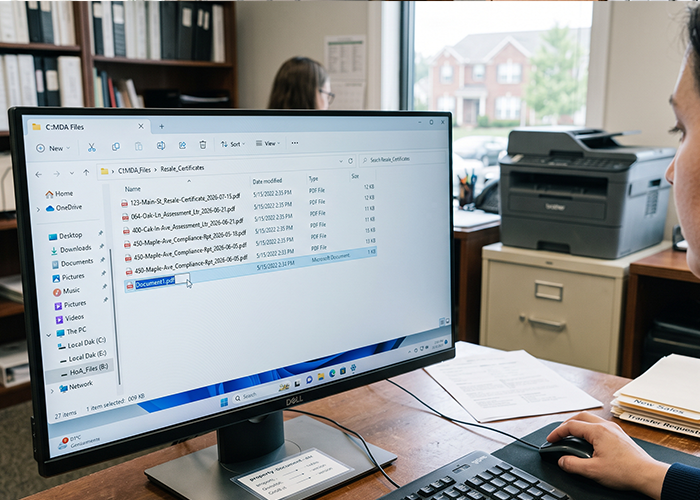
A great folder system only helps if the files inside it are named clearly. A vague name like “Document1” forces someone to open the file just to figure out what it actually is, which wastes time on a busy day.
A consistent naming convention should cover a few basic elements:
- The property address or unit number
- The document type
- The date, written as year-month-day
- A version number, if the file has been updated
A file named “123-Main-St_Resale-Certificate_2026-07-15” tells the whole story at a glance. Anyone on the team can find what they need without guessing or opening five different files first, which saves real time on busy closing days.
Tracking Deadlines Throughout the Transaction
Real estate transactions run on deadlines, and HOA paperwork adds a few more to the list. Missing even one can delay a closing or create unnecessary stress for everyone involved in the deal.
A few deadlines are worth tracking especially closely:
- Inspection contingency dates
- Financing approval dates
- HOA document request and delivery windows
- Final walkthrough and closing dates
A shared calendar or transaction management tool helps the whole team stay aware of what is coming up next. When deadlines live in one place instead of someone’s memory, fewer things fall through the cracks, and the whole transaction tends to move more smoothly toward closing day.
Sharing Files With Buyers, Sellers, and Agents
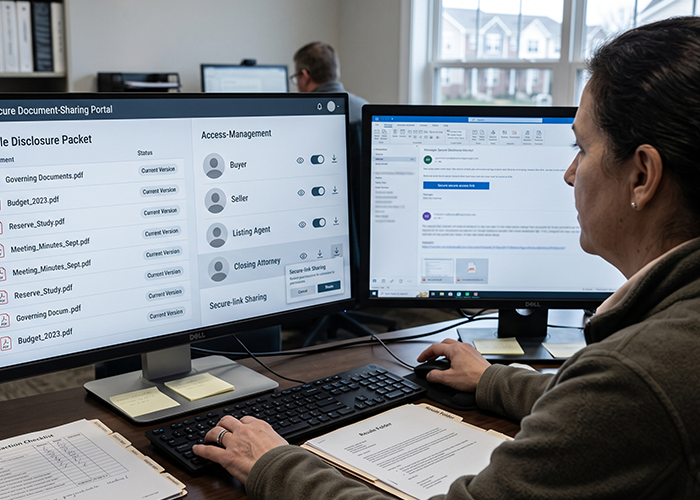
Organizing files internally is only half the job. At some point, documents need to reach buyers, sellers, agents, and sometimes attorneys, often on a fairly tight timeline.
Sending large attachments by email can cause problems. Files get lost in crowded inboxes, version control becomes messy, and sensitive information sits unprotected in someone’s inbox for months at a time.
A shared portal or secure link solves most of these issues. Everyone works from the same current version, and the management company keeps full control over who can view or download each file.
Handling Last-Minute Document Requests
Even well-organized transactions run into surprise requests. A lender might ask for an updated financial statement, or a title company might need a fresh copy of the insurance certificate a few days before closing.
These requests are much easier to handle when files are already organized and current. Instead of digging through old records under pressure, staff can pull the correct document in a matter of minutes.
Keeping a few frequently requested items updated on a regular basis, rather than only when asked, prevents most of these fire drills before they start. It also makes the association look far more prepared to everyone involved in the deal.
Choosing Software to Keep Files in Order

Plenty of tools exist to help manage real estate paperwork today. Options range from general cloud storage services to platforms built specifically for real estate transactions and HOA management.
The right choice depends on the size of the team and the complexity of the transactions being handled. A single agent might do fine with cloud storage and a simple folder structure, while a busy management company may need something more robust to keep pace.
Common categories worth comparing include:
- General cloud storage platforms for basic file sharing
- Dedicated real estate transaction management software
- HOA-specific management platforms with built-in resale tools
Whatever tool a team chooses, a few features matter most. Strong search functions, secure sharing links, and mobile access all make daily work considerably easier, especially during a busy closing season.
Working With a Transaction Coordinator
Some agents and management companies bring in a transaction coordinator to manage the paperwork side of a deal. This person focuses entirely on documents, deadlines, and communication, freeing up agents to focus on clients.
A good transaction coordinator lives inside the filing system every day. They know exactly which documents are outstanding, which deadlines are approaching, and who still needs to sign what.
For associations that handle a high volume of resales, a dedicated coordinator or a well-trained staff member can make a noticeable difference. Fewer documents get missed, and turnaround times on resale requests tend to shrink considerably.
Who Should Own the Filing System

Every transaction needs someone responsible for keeping files current. Without a clear owner, documents often end up duplicated in three different places or, worse, not saved anywhere at all.
On the HOA side, this responsibility usually falls to the community manager or a designated administrative staff member. On the real estate side, it often falls to the listing agent or a hired transaction coordinator.
Whoever owns the system should also set the rules for it. That includes deciding on folder structure, naming conventions, and who gets access to which files, so the process stays consistent no matter who is handling a given closing.
Preparing HOA Resale Packages Before They’re Needed
Waiting for a resale request to arrive before pulling documents together rarely works well. It puts pressure on staff and increases the odds that something gets rushed or overlooked entirely.
Many communities now keep a standing resale template ready to go at all times. Financial statements, current rules, and meeting minutes get updated on a regular schedule instead of scrambled together at the last minute.
This kind of preparation shortens turnaround times considerably. It also gives homeowners and agents a much better impression of how the association operates day to day.
Protecting Sensitive Transaction Information
Real estate files often contain personal and financial information. Buyer income details, account numbers, and signatures all need to stay secure throughout the transaction and well after it closes.
A few simple habits go a long way toward protecting that information:
- Limit file access to people who actually need it
- Use password protection or secure links instead of plain email attachments
- Avoid storing sensitive files on personal devices
- Follow state guidelines for how long records must be kept
Associations should also check their state’s specific retention rules. Requirements vary quite a bit from one state to the next, and some records need to be kept far longer than others.
How Long to Keep Real Estate Transaction Files
Once a transaction closes, the paperwork does not simply disappear. Most states require associations and real estate professionals to keep certain records for a set number of years after closing.
Financial records, resale certificates, and signed disclosures are usually kept the longest. Correspondence and drafts that never became final documents can often be cleared out much sooner, once a deal has closed successfully.
A written retention policy takes the guesswork out of this process. It gives everyone on the team a clear answer for how long a file needs to stick around before it can be archived or removed for good.
Using Templates to Save Time
Templates take a lot of the repetitive work out of transaction files. Instead of building a new checklist or cover letter from scratch every time, staff can start from a document that already fits the association’s process.
Useful templates often include a resale checklist, a standard cover letter for buyers, and a folder structure that gets copied for each new transaction. Small tweaks are usually all that is needed after that.
Over time, templates also make it easier to spot when something is missing. A blank line on a checklist stands out far more than a gap in someone’s memory ever could.
Reviewing Files After Closing
The work is not quite finished once a transaction closes. A quick review of the file helps confirm that everything was collected, signed, and saved where it belongs.
This is also a good moment to check for any documents that need to move into long-term storage or be flagged for future reference, such as updated owner contact information.
A short closing review, even just a few minutes long, catches small gaps before they turn into bigger problems down the road. It also keeps the filing system clean and ready for the next transaction.
Keeping HOA Boards Informed, Not Overwhelmed
Board members do not need to see every document in a transaction file, but they should have a general sense of how resale requests are handled. A short summary or a simple report each month usually does the trick.
This kind of visibility builds trust between the board and the management team. It also gives board members something concrete to point to if a homeowner ever raises a question about how a resale was processed.
A brief update is often enough. Board members rarely want a stack of paperwork, but they do want confidence that the process behind it is solid.
Building a Simple Checklist for Every Closing
A checklist turns a complicated process into a repeatable one. Instead of trying to remember every document from memory, the team can simply work through a list from start to finish.
A basic transaction checklist might include:
- Confirm the resale certificate has been requested
- Verify all HOA financial documents are current
- Upload signed disclosures to the shared folder
- Confirm deadline dates in the shared calendar
- Send a final document package to all parties before closing
Checklists also make training new team members much easier. Anyone can follow the same steps and reach the same result, no matter how experienced they are with the process.
Mistakes That Slow Down a Transaction
Even organized teams fall into a few common traps. Watching for these mistakes can save a lot of time and frustration down the road, especially during a busy closing season.
A handful of issues come up again and again:
- Saving files with inconsistent or unclear names
- Emailing documents back and forth instead of using a shared folder
- Forgetting to update the resale package after a rule or fee change
- Storing records on a single device with no backup
Most of these problems have fairly simple fixes. A shared system, a clear naming convention, and a habit of double-checking files before closing solve the majority of them without much extra effort.
A Well-Organized File Means a Faster Closing
A little structure goes a long way in a real estate transaction.
Clear folders, consistent file names, and a shared calendar keep buyers, sellers, agents, and the HOA moving toward the same closing date.
Need extra support? Our Directory connects you with experienced professionals who can help keep your community’s records organized, accurate, and ready for every closing. Start your search today!
Related Articles:
- 5 Common Communication Problems In HOAs Without A Manager
- Common HOA Management Mistakes and How to Avoid Them With Better Systems
- HOA Violation Reports: The Right Way to Handle Them
Trending Now

Related Article



Sign up for Our Monthly Newsletter
Sign up below for monthly updates on all HOA Resource