

Courtesy Notices in an HOA: Rules, Purpose, and Best Practices
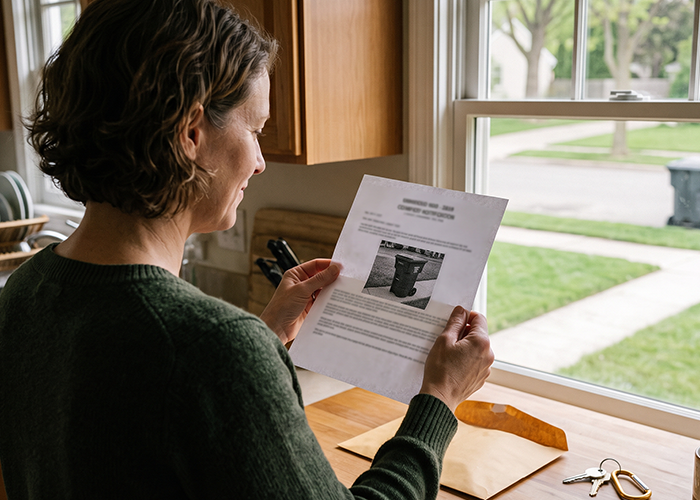
A courtesy notice in an HOA gives homeowners a chance to correct a potential rule violation before the matter moves into formal enforcement.
Browse By Category
Sign up for Our Newsletter

Sign up for Our Newsletter
Trending Now


A courtesy notice in an HOA gives homeowners a chance to correct a potential rule violation before the matter moves into formal enforcement.
What Are Courtesy Notices in an HOA?
Courtesy notices in an HOA are written reminders sent to homeowners when the association believes a property or activity may not comply with the community’s governing documents.
Unlike a formal violation notice, a courtesy notice is often intended as an early step that gives the homeowner an opportunity to address the issue before fines or other enforcement measures are considered.
The exact process will vary from one association to another. Some governing documents require a courtesy notice before formal enforcement, while others give the board more flexibility.
State laws may also affect how an association must provide notice and what steps must be followed before penalties can be imposed.
The goal is simple: identify the concern, explain what needs to be corrected, and give the homeowner a reasonable opportunity to resolve it. This approach can prevent a small issue from becoming a much larger dispute.
Why Do HOAs Use Courtesy Notices?
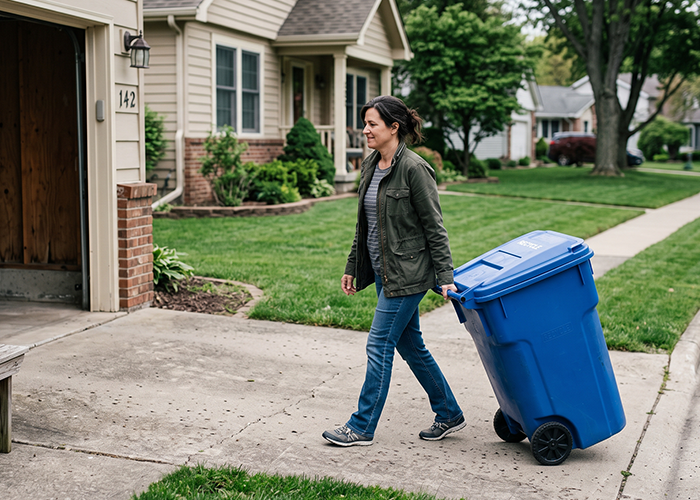
HOA rule enforcement does not have to begin with a fine or a formal hearing. In many cases, a homeowner may not even realize that something on the property violates the community’s rules.
A lawn may have become overgrown because the owner was away. A trash container may have been left at the curb because of a change in the collection schedule. A homeowner may also install a small improvement without realizing that architectural approval was required.
A courtesy notice gives the homeowner the benefit of the doubt while still allowing the board to address the issue.
There are several practical reasons an HOA may choose to use courtesy notices:
- They encourage voluntary compliance. Homeowners are given an opportunity to fix an issue before formal action begins.
- They reduce unnecessary conflict. A friendly reminder can feel very different from a letter announcing a fine.
- They create a written record. The association can document that the homeowner was informed about the concern.
- They support consistent enforcement. A standard notice process can help the board handle similar situations in a similar way.
- They save time. Many minor violations can be resolved without a hearing, fine, or legal involvement.
A courtesy notice is not about ignoring the rules. It is about enforcing them in a way that gives homeowners a reasonable chance to comply.
Courtesy Notice vs. Formal Violation Notice
These two types of notices can look similar, but they serve different purposes.
A courtesy notice is generally an early communication. It lets the homeowner know that a possible violation has been observed and explains what should be done to correct it. Depending on the association’s policies, it may not be considered the formal start of the enforcement process.
A formal violation notice carries more weight. It may identify the specific provision that was violated, establish a correction deadline, explain the consequences of continued noncompliance, and provide information about a hearing or other rights available to the homeowner.
The distinction is important because an HOA should not assume that calling something a “courtesy notice” automatically makes it informal. The governing documents and applicable state law determine what procedures the association must follow.
Boards should review their own documents before creating or changing an enforcement process. A procedure that works for one community may not be appropriate for another.
When Should an HOA Send a Courtesy Notice?

Courtesy notices are generally most useful for minor or first-time issues that can be corrected without much difficulty.
For example, an HOA may send a courtesy notice when a homeowner has an overgrown lawn, leaves a trash container outside for too long, or keeps holiday decorations up after the permitted period. A notice may also be appropriate when a homeowner appears to have made a minor exterior change without realizing that approval was needed.
Common situations can include:
- Overgrown grass or landscaping
- Trash or recycling containers left outside
- Improper parking
- Unapproved exterior changes
- Holiday decorations that remain past the allowed period
- Minor property maintenance concerns
- Noise issues
- Pet-related rule concerns
- Items stored in areas where they are not permitted
- Other first-time or minor rule violations
Not every violation should be treated the same way. A serious issue involving safety, property damage, or an immediate threat to the community may require a different response.
The board or management company should first verify that a violation actually exists. A notice based on an assumption, incomplete information, or an incorrect interpretation of the rules can create frustration that could have been avoided.
What Should a Courtesy Notice Include?
A courtesy notice should be friendly, but it should still be clear. Homeowners should not have to guess why they received the letter or what the association wants them to do.
A well-written notice will usually include:
- The date of the notice
- The property address
- A brief description of the concern
- The date or approximate date the issue was observed
- The applicable rule, when appropriate
- A clear explanation of what needs to be corrected
- A reasonable correction period
- Contact information for questions
- Information about what may happen if the issue is not corrected
Photos may also be helpful when they clearly show the condition being addressed. Good documentation can reduce confusion and help the homeowner understand exactly what the association observed.
The wording matters, too. A notice should focus on the property or conduct rather than making assumptions about the homeowner’s intentions. “The trash container was observed at the curb outside the permitted collection period” is more useful than “You continue to ignore the rules.”
Clear language keeps the conversation focused on the issue.
How Long Should a Homeowner Have to Correct a Violation?

There is no single correction period that applies to every HOA. The appropriate timeframe depends on the association’s governing documents, applicable law, the type of violation, and how much time a reasonable homeowner would need to correct it.
A homeowner may be able to move a trash container or remove an unauthorized item within a day or two. A landscaping problem may require several days or a contractor. A larger repair could take considerably longer.
The association should avoid setting deadlines that are impossible to meet.
At the same time, correction periods should not be so open-ended that the rule becomes difficult to enforce. A clear deadline gives everyone the same expectation and makes follow-up easier.
If a homeowner contacts the association and explains that additional time is needed, the board or management company can review the request under the association’s policies. Any extension should be handled consistently so similar homeowners are treated fairly.
What Happens After a Courtesy Notice?
Ideally, the homeowner corrects the issue and the matter ends there. That is one of the main reasons courtesy notices can be useful.
If the violation remains, however, the association may need to move to the next step in its enforcement process. The next action could be a formal violation notice, a hearing notice, or another step outlined in the governing documents.
A typical process may look like this:
- The association identifies and verifies a potential violation.
- A courtesy notice is sent when appropriate.
- The homeowner is given time to correct the issue.
- The association conducts a follow-up inspection or review.
- If the issue remains, a formal notice may be sent.
- The homeowner is given any hearing or appeal rights required by the governing documents or law.
- Additional enforcement may follow if the violation continues and the association has authority to take that action.
Not every HOA will follow these exact steps. Some communities may skip the courtesy stage, while others may have several stages before a fine can be imposed.
The important point is consistency. The association should follow the process it has adopted instead of creating a different procedure for each homeowner.
How Should HOAs Handle Repeat Violations?

Repeat violations can be frustrating for both the board and the homeowner. If an owner receives multiple reminders about the same issue but does not correct it, the association may need to move beyond courtesy notices.
This is where a written enforcement policy becomes especially helpful. Board members should not have to decide from scratch what to do every time a homeowner fails to comply.
The policy should explain how violations are identified, how notices are delivered, how much time homeowners have to correct them, and what happens when a violation continues.
Consistency also matters when dealing with repeat violations. If one homeowner receives a formal notice after ignoring three courtesy notices while another homeowner receives no follow-up for the same conduct, the board may face questions about selective enforcement.
The goal should not be to punish someone for the sake of punishment. The goal is to bring the property or conduct back into compliance while protecting the association’s ability to enforce its rules fairly.
How Can Boards Make Courtesy Notices More Effective?
A courtesy notice works best when it is treated as a communication tool rather than a warning designed to scare homeowners.
Start with the facts. Explain what was observed and connect the concern to the community’s rules. Avoid emotional language, personal opinions, or statements about what the homeowner “should have known.”
It also helps to make the requested correction specific. Telling someone to “address the violation” is not nearly as useful as explaining exactly what needs to change.
Boards should also use a consistent template. A standard format helps make sure important information is not left out and makes notices easier for management staff to prepare.
The tone should remain professional from beginning to end. Homeowners are more likely to cooperate when they feel they are being treated with respect.
Why Documentation Matters

Good documentation is an important part of HOA enforcement. Even when a courtesy notice is informal, the association should keep a record of what was observed, when it was observed, and what communication was sent.
Useful records may include:
- Inspection dates
- Photographs
- Copies of courtesy notices
- Emails or letters exchanged with the homeowner
- Follow-up inspection notes
- Copies of formal notices
- Hearing records
- Board decisions
Documentation should be factual and organized. Personal comments, assumptions, or unnecessary details should be avoided.
Good records also help future board members understand what happened. HOA boards change over time, and an organized enforcement history makes it easier for new directors or management staff to pick up where others left off.
What Should Homeowners Do After Receiving a Courtesy Notice?
Receiving a courtesy notice can be frustrating, especially if the homeowner believes the issue is minor or believes the association made a mistake. The best response is usually to review the notice carefully before reacting.
Start by identifying the rule mentioned in the notice. Look at the association’s governing documents and compare the requirement with the condition at the property.
If the issue is valid, correcting it within the stated timeframe may be the easiest way to close the matter. If there is a legitimate reason the issue cannot be corrected right away, contacting the association early can help.
Homeowners who believe the notice is incorrect should still respond professionally. They can explain their position, provide relevant information, and ask the association to review the matter.
Ignoring the notice generally does not make the issue disappear. If the association’s enforcement process allows for a formal response or hearing, homeowners should use those opportunities when appropriate.
What If the Homeowner Disagrees With the Notice?
Not every HOA notice is necessarily correct. Mistakes can happen. A property may have been photographed before the homeowner corrected the issue, a rule may have been misunderstood, or the association may have applied the wrong provision.
Homeowners should be able to raise legitimate questions without feeling that they are being treated as difficult.
The board or management company should review the concern objectively. If the homeowner provides information showing that the violation does not exist, the association should be willing to correct its records.
This is another reason documentation matters. Clear photos, dates, rule references, and inspection notes give both sides something concrete to review.
Disagreements should be handled through the procedures established by the association. Keeping communication calm and factual can prevent a small misunderstanding from becoming a larger community dispute.
Common Mistakes to Avoid With Courtesy Notices
Courtesy notices can help an HOA, but they can also create problems when they are poorly handled.
One common mistake is using vague language. A homeowner needs to know what the association observed and what needs to be corrected.
Another problem is inconsistent enforcement. If similar violations are treated differently without a valid reason, homeowners may question whether the association is applying its rules fairly.
Boards should also avoid threatening fines in a courtesy notice when the association has not confirmed that the proper enforcement process allows for them. The notice should accurately describe what happens next.
Finally, boards should not allow courtesy notices to become a substitute for reviewing outdated rules. If a rule is unclear, unreasonable, or difficult to apply consistently, the association may need to review the governing documents rather than simply sending more notices.
Best Practices for HOA Boards
A strong courtesy notice process starts before the first letter is sent. Boards should make sure their enforcement procedures are clear, written down, and consistent with the association’s governing documents and applicable state law.
A few practices can make the process easier:
- Verify the violation first. Make sure the condition actually violates an enforceable rule.
- Use a standard notice format. Keep the language clear and professional.
- Reference the rule when appropriate. Homeowners should be able to understand the basis for the notice.
- Give a reasonable correction period. Consider the nature of the issue and the time needed to resolve it.
- Document every step. Keep photographs, notices, responses, and follow-up records.
- Apply the process consistently. Similar situations should generally receive similar treatment.
- Keep the tone respectful. The purpose is to encourage compliance, not create hostility.
- Know when formal enforcement is needed. Courtesy notices should not replace required legal or procedural steps.
- Review the policy regularly. Make sure the process remains practical and consistent with current requirements.
A board that follows a clear process will usually spend less time dealing with arguments about how enforcement was handled and more time addressing the actual issue.
A Better Way to Approach HOA Enforcement
Courtesy notices are a small part of HOA management, but they can have a big effect on the relationship between the association and its homeowners. A clear, respectful notice can resolve an issue before it turns into a fine, hearing, complaint, or legal dispute.
The strongest enforcement programs are not necessarily the harshest ones. They are the ones that give homeowners clear expectations, follow a consistent process, document decisions, and treat residents fairly.
From Courtesy Notice to Community Compliance
Effective HOA enforcement does not always have to begin with penalties.
For boards, having a consistent process matters just as much as the notice itself.
When your board needs additional support, our directory can help you find the right support for your community. Explore Your Options Today!
Related Articles:
- HOA Violation Notice: What To Do And Homeowners Rights
- How To Make An HOA Violation Letter
- A Step-by-Step Approach to Enforcing HOA Rules
Trending Now

Related Article



Sign up for Our Monthly Newsletter
Sign up below for monthly updates on all HOA Resource