
Writing Violation Notices: A Complete Guide for HOA Boards
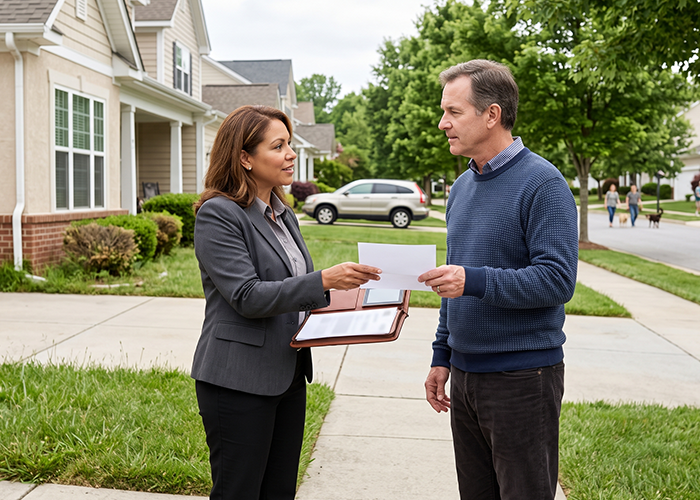
Writing violation notices is one of the most important responsibilities of an HOA board. A well-written notice helps homeowners understand the issue, encourages compliance, and reduces misunderstandings before they become bigger disputes.
Browse By Category
Sign up for Our Newsletter

Sign up for Our Newsletter
Trending Now


Writing violation notices is one of the most important responsibilities of an HOA board. A well-written notice helps homeowners understand the issue, encourages compliance, and reduces misunderstandings before they become bigger disputes.
Writing Violation Notices the Right Way
When done correctly, violation notices protect the community while treating residents fairly. The goal is not to punish homeowners but to communicate expectations clearly and consistently.
Writing violation notices requires more than pointing out a rule that someone broke. Every notice represents the association, so the language should remain respectful, factual, and professional. Even when dealing with repeated violations, the board should avoid emotional or confrontational wording.
A clear notice helps homeowners understand exactly what happened, why it matters, and what they need to do next. If the letter leaves room for interpretation, the owner may become confused or challenge the violation unnecessarily.
Consistency also matters. Every homeowner deserves to be treated under the same standards. When violation notices follow a consistent format and process, the board demonstrates fairness while reducing the risk of claims involving selective enforcement.
Whether the association manages a small neighborhood or a large master-planned community, clear communication remains one of the strongest tools available for maintaining compliance.
Why HOA Violation Notices Matter

Violation notices do much more than document broken rules. They serve as the first step toward resolving problems before they escalate into formal disputes or legal action.
Without written notices, homeowners may not realize they have violated a governing document. Some issues happen because residents misunderstand the rules, overlook maintenance responsibilities, or simply forget deadlines.
A properly written notice also creates a documented record of the association’s enforcement efforts. If additional action becomes necessary later, the board can demonstrate that it provided notice, allowed time for correction, and followed established procedures.
Beyond documentation, violation notices help preserve community standards. Consistent enforcement protects property values and reinforces the expectations that all residents agreed to follow when purchasing their homes.
When Should an HOA Send a Violation Notice?
Not every issue requires immediate enforcement. In many communities, management companies or board members first verify that a violation actually exists before sending a formal notice.
The association should review its governing documents to determine how violations must be handled. Some violations require courtesy notices first, while others may move directly into formal enforcement depending on their severity.
Common situations that often result in violation notices include:
- Overgrown lawns or neglected landscaping
- Unauthorized exterior modifications
- Improper parking
- Trash containers left out beyond collection day
- Noise complaints that violate community rules
- Unauthorized fencing or structures
- Failure to maintain the home’s exterior
- Pets violating leash or nuisance rules
Boards should also verify the violation before contacting the homeowner. Relying on assumptions or incomplete information may create unnecessary conflict.
What Every HOA Violation Notice Should Include

A violation notice should answer every reasonable question a homeowner might have after reading it. Missing information often leads to confusion, additional phone calls, and disputes that could have been avoided.
Most effective notices include several important elements.
The Homeowner’s Information
Begin with the owner’s name, property address, mailing address if different, and the date the notice was issued. This ensures the letter is directed to the correct individual and becomes part of the association’s official records.
A Clear Description of the Violation
State exactly what the association observed. Avoid vague statements like “your property is in violation.”
Instead, explain the specific issue.
For example:
“On June 15, the association observed an inoperable vehicle parked in the driveway for longer than permitted under the community rules.”
Specific language leaves little room for misunderstanding.
The Rule That Applies
Every violation notice should reference the governing document that supports the association’s action.
Depending on the community, this may include:
- Declaration of Covenants, Conditions, and Restrictions (CC&Rs)
- Bylaws
- Rules and regulations
- Architectural guidelines
Whenever possible, include the article or section number. This allows homeowners to review the rule themselves.
Required Corrective Action
Explain exactly what the homeowner needs to do.
Instead of saying:
“Correct the violation immediately.”
Provide clear direction such as:
“Please remove the trailer from the driveway or relocate it to an approved storage location.”
Simple instructions make compliance much easier.
Compliance Deadline
Every notice should specify when the violation must be corrected.
The deadline should comply with the association’s governing documents and applicable state laws. Giving homeowners a reasonable timeframe demonstrates fairness while allowing sufficient opportunity to resolve the issue.
Possible Next Steps
Homeowners should understand what may happen if the violation remains unresolved.
Possible consequences may include:
- Additional violation notices
- Hearing before the board
- Monetary fines
- Suspension of community privileges
- Legal action if authorized by governing documents and state law
The notice should explain these possibilities without sounding threatening.
Contact Information
Always provide a way for homeowners to ask questions or request clarification.
Include:
- HOA management office
- Community manager
- Phone number
- Email address
- Office hours if applicable
Many violations are resolved quickly because homeowners simply have questions that can be answered through conversation.
Tips for Writing Violation Notices That Encourage Compliance
The wording of a notice often determines how a homeowner responds. A respectful letter usually receives a much better reaction than one that feels accusatory.
Several communication practices can improve compliance.
Stay Professional
Avoid emotional language, sarcasm, or assumptions about the homeowner’s intentions.
Focus only on the observed facts.
Professional communication keeps discussions productive even when homeowners disagree with the board’s decision.
Be Specific
General statements often create confusion.
Instead of saying:
“Your landscaping needs attention.”
Say:
“Grass along the front yard has exceeded the maximum height permitted under the community landscaping standards.”
Specific details make expectations much clearer.
Remain Neutral
Avoid language that assigns blame or questions the homeowner’s character.
The notice should address the violation itself rather than making personal comments about the resident.
Neutral wording helps prevent defensive reactions and encourages cooperation.
Use Simple Language
Legal terms and technical wording may confuse homeowners.
Write the notice using plain American English whenever possible. Residents should understand the letter after reading it once.
Proofread Every Notice
Even small errors can reduce credibility.
Before sending a violation notice, verify:
- Property address
- Homeowner name
- Dates
- Governing document references
- Compliance deadline
- Grammar and spelling
A polished notice reflects professionalism and attention to detail.
Common Mistakes to Avoid When Writing Violation Notices

Even experienced HOA boards can make mistakes when preparing violation notices. While many of these errors seem minor, they can create confusion, delay compliance, or even weaken the association’s position if a dispute reaches a hearing or court.
Here are some of the most common mistakes to avoid.
Using Emotional or Confrontational Language
Violation notices should never sound angry or personal. Homeowners are more likely to cooperate when the communication remains calm and respectful.
Statements that accuse, criticize, or shame residents often make situations worse. Instead, focus on the facts and explain what needs to be corrected.
Failing to Cite the Correct Rule
Every violation should be tied to a specific provision in the governing documents. Without that reference, homeowners may question why they received the notice or believe the board is enforcing rules inconsistently.
Double-check the applicable section before sending the letter.
Giving Unclear Instructions
Some notices identify the problem but fail to explain how to fix it.
For example, telling a homeowner to “clean up the property” leaves room for interpretation. A better approach is to explain exactly what needs attention, whether that involves removing debris, trimming landscaping, or storing recreational vehicles in an approved location.
Setting Unrealistic Deadlines
Homeowners should have enough time to correct the issue unless it presents an immediate safety concern.
Reasonable deadlines show that the board is acting fairly while still encouraging timely compliance.
Skipping Documentation
A violation notice should never be sent without supporting records.
Photos, inspection notes, dates, and witness information help verify that the violation existed. Good documentation protects both the association and the homeowner if questions arise later.
Should HOAs Send Courtesy Notices First?
Many associations begin the enforcement process with a courtesy notice. Although not always required, this approach often resolves minor violations without creating unnecessary tension.
A courtesy notice serves as a friendly reminder instead of a formal warning. It lets homeowners know that an issue has been observed and provides an opportunity to correct it voluntarily.
This approach works especially well for:
- Lawn maintenance issues
- Trash container violations
- Holiday decorations left up beyond the permitted date
- Minor exterior maintenance concerns
- First-time parking violations
Some governing documents require a courtesy notice before formal enforcement begins, while others allow boards to proceed directly to an official violation notice. Associations should always follow their governing documents and applicable state laws.
When homeowners see that the board is trying to work with residents rather than immediately imposing penalties, they are often more willing to cooperate.
How to Handle Repeat Violations

Unfortunately, not every violation is resolved after the first notice.
Some homeowners ignore the letter, while others repeatedly violate the same rule. In these situations, consistency becomes especially important.
The association should continue following its established enforcement policy rather than reacting emotionally or treating one homeowner differently from another.
A typical enforcement process may include:
- Initial courtesy notice, if applicable
- Formal violation notice
- Follow-up inspection
- Notice of hearing
- Board hearing
- Fine or other authorized enforcement action
- Legal remedies if necessary
Throughout the process, every communication should remain professional and well documented.
The board should also maintain accurate records showing inspection dates, correspondence, hearing notices, homeowner responses, and board decisions. Organized records help demonstrate that the association followed its procedures fairly and consistently.
Best Practices for Documenting Violations
Good documentation supports every successful enforcement program. It creates a reliable record of what occurred and helps protect the association if the homeowner disputes the violation.
Whenever possible, document each violation using the same process.
Helpful documentation includes:
- Photographs showing the violation
- Inspection dates and times
- Names of inspectors or managers
- Copies of all notices sent
- Emails and written homeowner responses
- Hearing records and board decisions
- Notes regarding follow-up inspections
Many HOA management companies also use management software to organize these records. Digital files make it easier to track compliance, monitor repeat violations, and retrieve documents when needed.
Documentation should always remain objective. Avoid adding personal opinions or unnecessary comments that do not relate to the violation itself.
Can Homeowners Dispute a Violation Notice?

Yes. Homeowners generally have the right to question or dispute a violation notice.
The exact process depends on the association’s governing documents and applicable state laws, but many communities provide an opportunity for homeowners to request a hearing before fines or other penalties are imposed.
During a hearing, homeowners may explain their position, provide evidence, or show that the violation has already been corrected.
The board should approach every hearing with an open mind. The goal is to reach a fair decision based on the governing documents and the available facts.
Board members should avoid making decisions before hearing the homeowner’s explanation. Listening carefully helps maintain trust within the community and demonstrates that the association values due process.
If the violation is confirmed, the board should explain its decision clearly and document the outcome for future reference.
Technology Is Improving HOA Violation Notices
Technology has made violation enforcement more organized and efficient than ever before.
Many associations now use management software to track inspections, generate notices, store photographs, and monitor compliance deadlines. These systems help reduce administrative work while improving consistency across the community.
Some platforms also allow homeowners to receive notices electronically, submit responses online, and upload photographs showing completed corrections.
Digital recordkeeping offers several advantages:
- Faster communication
- Better organization
- Easier tracking of repeat violations
- Improved record retention
- Reduced paperwork
- More consistent enforcement
Even with modern technology, the quality of the communication still matters. Software may generate the notice, but the message should remain clear, respectful, and easy to understand.
Strong Communication Leads to Better Compliance
Writing violation notices is about much more than enforcing community rules. It is an opportunity to educate homeowners, resolve concerns early, and maintain the standards that benefit the entire neighborhood.
When notices are clear, respectful, and supported by the governing documents, homeowners are more likely to understand the issue and take corrective action.
Empower your board to enforce HOA rules with fairness, consistency, and confidence. Explore our directory today to find a professional HOA management company that can support your community.
Related Articles:
Trending Now

Related Article


Sign up for Our Monthly Newsletter
Sign up below for monthly updates on all HOA Resource