

E-Bikes in an HOA: Rules Every Homeowner Should Know

E-bikes are quickly becoming part of everyday neighborhood life. But as their popularity grows, many HOAs are discovering that their existing rules may not cover where and how residents can ride, park, or store them.
Browse By Category
Sign up for Our Newsletter

Sign up for Our Newsletter
Trending Now


E-bikes are quickly becoming part of everyday neighborhood life. But as their popularity grows, many HOAs are discovering that their existing rules may not cover where and how residents can ride, park, or store them.
Understanding E-Bikes in an HOA
Understanding how e-bikes in an HOA are regulated can help homeowners enjoy their bikes while respecting community standards and keeping everyone safe.
An electric bicycle, or e-bike, is a bicycle equipped with an electric motor that assists with pedaling or, in some models, provides power through a throttle. Unlike motorcycles or mopeds, most e-bikes are designed to operate on bicycle paths and neighborhood streets, though the rules vary by state.
For homeowners associations, the growing popularity of e-bikes presents new questions. Boards must balance residents’ freedom to use modern transportation with the responsibility to protect common areas, reduce liability, and maintain a peaceful community.
Many HOA governing documents were created before e-bikes became widely available. As a result, boards often discover that their existing rules mention bicycles but never address electric bicycles. This leaves room for confusion about where they can be ridden, where they may be stored, and whether they can be charged in shared spaces.
Updating community rules can help eliminate uncertainty before disagreements arise. Clear policies also make it easier for homeowners to understand what is expected without having to interpret outdated language.
Why HOAs Create Rules for E-Bikes
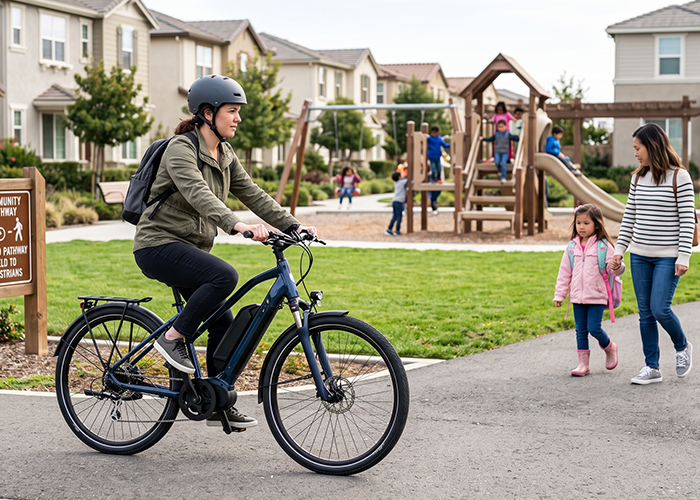
Most HOA rules exist for one reason: to protect the community as a whole. E-bike policies are no different.
While many residents view e-bikes as little more than bicycles with electric assistance, they can travel faster than traditional bikes and weigh considerably more. Those differences may increase the risk of accidents on sidewalks, walking trails, or shared recreational areas.
An HOA may also need to consider how e-bikes affect common property. Frequent riding on landscaped paths, excessive speeds near playgrounds, or improper storage in hallways can create safety concerns and maintenance issues.
Insurance is another factor. Community associations have a duty to reduce risks that could result in injuries or property damage. Establishing reasonable rules demonstrates that the board has taken steps to promote safe use throughout the neighborhood.
Well-written policies are not meant to discourage e-bike ownership. Instead, they provide clear expectations so everyone can enjoy the community safely.
Common Rules for E-Bikes
Every association has its own governing documents, so no single set of rules applies everywhere. However, many communities address similar concerns when creating policies for e-bike use.
Common HOA rules may include:
- Speed limits within the community
- Designated riding areas
- Restrictions on sidewalks or walking paths
- Parking requirements
- Storage guidelines
- Battery charging requirements
- Prohibited modifications that increase speed
- Noise restrictions for electric motorcycles that resemble bicycles
Some associations also distinguish between residents, guests, and delivery riders. While homeowners may be allowed to ride throughout the community, commercial deliveries using larger electric bikes could be subject to different restrictions.
The key is consistency. Rules should apply fairly to everyone and be enforced uniformly.
Can an HOA Ban E-Bikes?
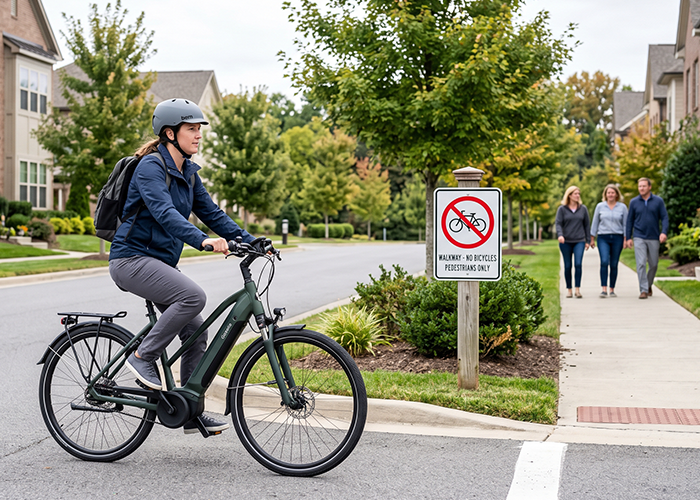
This is one of the most common questions homeowners ask.
In many cases, an HOA may regulate how and where e-bikes are used within the community. Whether an association can completely ban them depends on several factors, including state law, local ordinances, and the association’s governing documents.
A complete prohibition may be difficult to justify if state law broadly recognizes e-bikes as bicycles. Boards should work closely with legal counsel before adopting rules that significantly restrict residents’ rights.
Instead of imposing an outright ban, many associations focus on reasonable operational rules. For example, they may prohibit riding on sidewalks crowded with pedestrians while allowing e-bikes on community roads.
This approach often strikes a better balance between homeowner convenience and community safety.
State Laws Can Affect HOA E-Bike Policies
Although HOAs have authority to adopt reasonable rules, they cannot create policies that conflict with state or federal law. That is why boards should understand how their state’s e-bike laws interact with community regulations.
Many states have adopted a three-class system for electric bicycles.
- Class 1 e-bikes provide motor assistance only while pedaling and stop assisting at 20 miles per hour.
- Class 2 e-bikes can use a throttle and also stop providing assistance at 20 miles per hour.
- Class 3 e-bikes provide pedal assistance up to 28 miles per hour and often have additional operating requirements.
These classifications help determine where e-bikes may legally operate and whether certain equipment or age requirements apply.
California
California has some of the country’s most established e-bike regulations. State law recognizes the three-class system and sets rules regarding helmet use, age restrictions for certain classes, and where different types of e-bikes may be ridden.
An HOA in California can establish reasonable community rules, but those policies generally cannot conflict with state laws governing the operation of electric bicycles.
Florida
Florida also treats many electric bicycles similarly to traditional bicycles under state law, provided they meet statutory requirements. Riders generally have the same rights and responsibilities as cyclists using public roadways.
A Florida HOA may still regulate activity within private common areas, such as trails, clubhouses, or recreational spaces, as long as those restrictions are consistent with governing documents and applicable law.
Other States
Many states have adopted similar classifications through legislation based on model e-bike laws. However, differences still exist regarding helmets, rider age, trail access, and local government authority.
For that reason, HOA boards should avoid adopting policies copied from another state without first confirming that they align with local law.
Safety Should Remain the Top Priority

Whether a community has five e-bikes or five hundred, safety should guide every HOA policy.
Electric bicycles accelerate faster than traditional bikes, which means riders must pay closer attention around children, pets, and pedestrians. A shared sidewalk can quickly become hazardous when riders travel at higher speeds.
Communities can reduce risks by promoting practical safety expectations, including:
- Following posted speed limits
- Yielding to pedestrians
- Wearing helmets whenever appropriate
- Using lights during low-light conditions
- Avoiding distracted riding
- Keeping both hands available for steering whenever possible
Boards can also encourage residents to report damaged pathways, poor lighting, or visibility issues that increase accident risks.
Education often proves more effective than enforcement alone. When homeowners understand why a rule exists, they are generally more willing to follow it.
Battery Charging and Fire Safety
One topic receiving increased attention is lithium-ion battery safety.
Most e-bike batteries are safe when used according to manufacturer instructions. However, damaged batteries, aftermarket chargers, or improper charging practices can increase the risk of overheating and fire.
HOAs, particularly condominium and townhome communities with shared buildings, may adopt reasonable guidelines to reduce these risks.
Examples include:
- Charging batteries only with approved chargers
- Avoiding extension cords in common hallways
- Not blocking emergency exits while charging
- Storing batteries away from excessive heat
- Following manufacturer recommendations for replacement and maintenance
Boards should avoid creating rules based solely on isolated news stories. Instead, policies should reflect guidance from fire safety organizations and local building officials.
Parking and Storage Rules for E-Bikes
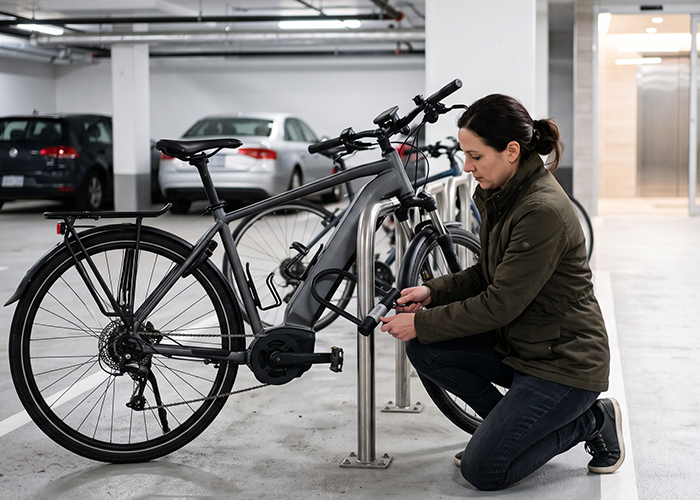
Where residents keep their e-bikes can be just as important as where they ride them. An improperly stored bike may block walkways, create safety hazards, or detract from the community’s appearance.
Single-family HOAs often allow homeowners to store e-bikes inside garages or enclosed areas on their property. Condominium and townhome communities, however, may have stricter rules because residents share hallways, stairwells, parking garages, and other common elements.
An HOA may establish storage requirements such as:
- Keeping e-bikes inside a garage or designated storage area
- Prohibiting bikes from being left in hallways or stairwells
- Restricting storage on balconies if it affects the building’s appearance
- Requiring bikes to be secured in designated bicycle racks
- Limiting long-term storage in common areas
These rules help maintain accessibility while reducing tripping hazards and protecting emergency exits.
E-Bikes, Golf Carts, and Other Electric Vehicles
HOA boards sometimes group all electric vehicles together, but doing so may create confusion. E-bikes, golf carts, electric scooters, and other motorized devices often fall under different legal definitions.
Golf carts are generally larger, travel on roads, and may require additional safety equipment depending on state law. Electric scooters can have separate operating rules, especially if they are capable of higher speeds.
Because each vehicle type presents different safety concerns, HOAs should define them clearly within their governing documents. Using precise language helps residents understand which rules apply to each type of vehicle and reduces the chance of disputes.
Enforcing HOA E-Bike Rules Fairly

Even the best-written policy has little value if it is enforced inconsistently. Homeowners expect rules to apply equally, regardless of who owns the e-bike or how long they have lived in the community.
Boards should follow the enforcement procedures outlined in their governing documents and applicable state laws. In many communities, this begins with a written notice explaining the violation and providing the homeowner an opportunity to correct the issue.
Depending on the association’s governing documents, continued violations may result in:
- Written warning notices
- Opportunity for a hearing
- Monetary fines
- Suspension of certain community privileges
- Additional remedies allowed under governing documents or state law
Consistency is essential. Selective enforcement can create unnecessary conflict and may expose the association to legal challenges. When similar violations receive similar responses, residents are more likely to view the process as fair.
Documentation also plays an important role. Keeping accurate records of complaints, inspections, notices, and board decisions helps demonstrate that the association acted reasonably and followed its established procedures.
Tips for Homeowners Who Own an E-Bike
Owning an e-bike in an HOA community does not have to be complicated. A little awareness can go a long way toward preventing misunderstandings with neighbors or the association.
Homeowners should make a habit of reviewing their HOA’s governing documents before purchasing or regularly using an e-bike within the community. If the rules are unclear, asking the board or management company for clarification is often better than making assumptions.
Residents can also help create a safer environment by:
- Riding at a safe speed in residential areas
- Yielding to pedestrians and children
- Respecting posted community signs
- Parking only in approved locations
- Maintaining the bike and battery according to the manufacturer’s recommendations
- Reporting damaged pathways or safety hazards to the HOA
Being considerate of neighbors helps preserve the positive atmosphere every community strives to maintain.
Best Practices for HOA Boards
As e-bikes continue to grow in popularity, associations should periodically review their governing documents to determine whether updates are needed. Policies written years ago may no longer address today’s technology or resident expectations.
When developing or revising e-bike rules, boards should focus on safety, clarity, and consistency rather than unnecessary restrictions. Rules that are easy to understand are also easier to enforce.
Some best practices include:
- Define what qualifies as an e-bike.
- Reference applicable state and local laws.
- Establish reasonable speed limits in common areas.
- Identify where riding is permitted or prohibited.
- Address parking, storage, and battery charging.
- Apply rules consistently to all residents.
- Consult the association’s attorney before adopting new policies.
Seeking homeowner input during the rule-making process can also improve community acceptance. Residents are more likely to support new policies when they understand the reasons behind them and have an opportunity to provide feedback.
Many boards find that working with an experienced HOA management company makes this process much easier. Professional managers can help draft clear policies, communicate rule changes, coordinate legal reviews, and ensure consistent enforcement across the community.
Frequently Asked Questions
Can an HOA prohibit residents from owning an e-bike?
Generally, an HOA has greater authority to regulate how e-bikes are used on community property than to prohibit ownership altogether. Whether a restriction is enforceable depends on the governing documents and applicable state law.
Does homeowners insurance cover e-bikes?
Coverage varies by insurance provider and policy. Some homeowners insurance policies offer limited coverage for theft or damage, while others may require additional endorsements. Homeowners should review their policy or speak with their insurance agent to understand their coverage.
Can visitors ride e-bikes in an HOA?
Many associations allow guests to use e-bikes, provided they follow the same community rules as residents. HOAs may also establish separate guidelines for commercial delivery riders or other non-residents.
Are e-bike batteries allowed to be charged in common areas?
That depends on the association’s governing documents and community policies. Some HOAs prohibit charging in shared spaces due to fire safety concerns, while others designate approved charging locations.
Do HOA rules apply on public streets?
Generally, HOA rules apply to private property and common areas owned or maintained by the association. Public streets are typically governed by state and local traffic laws, although homeowners should review their governing documents for any community-specific restrictions.
Smart E-Bike Policies Help Build Safer Communities
E-bikes are becoming a permanent part of modern neighborhoods, and HOAs have an opportunity to create policies that support both innovation and community safety.
The goal is not to limit convenience but to protect shared spaces and promote respectful living.
Take the next step toward stronger community management. Explore our directory to connect with trusted HOA management companies. Start exploring now!
Related Articles:
- Creating a Green HOA: How to Achieve Sustainability
- Can A Homeowner Benefit From Property And Casualty Insurance?
- The Truth about HOAs:Don’t Blame Governing Documents,Blame Inconsistent Enforcement
Trending Now

Related Article



Sign up for Our Monthly Newsletter
Sign up below for monthly updates on all HOA Resource